The Gospel of Truth is a Valentinian Gnostic homily found in Nag Hammadi Codex I (the Jung Codex) and widely attributed to Valentinus himself. It is not a narrative gospel — it is a meditative theological discourse on the nature of ignorance, knowledge, and salvation, written with exceptional literary quality. It opens with a description of the "gospel of truth" as "joy for those who have received from the Father of Truth the gift of knowing him."
What Kind of Text Is It?
The Gospel of Truth is not a gospel in any conventional sense — it contains no narrative, no sayings of Jesus, no scenes from his ministry, and no account of his death or resurrection. It is a homily: an extended meditation on a theological theme, written with poetic skill unusual in early Christian literature. Scholars consistently rate it among the most beautifully written texts in the entire Nag Hammadi collection.
The title is not a formal title but an incipit — it comes from the opening words: "The gospel of truth is a joy for those who have received from the Father of Truth the gift of knowing him..." The text unfolds from this beginning as a meditation on what it means to know the Father, what ignorance does to the soul, and how the coming of Jesus dissolved that ignorance.
Authorship — Was It Written by Valentinus?
The question of authorship is the most debated aspect of the text. Irenaeus of Lyons, writing around 180 CE, mentions that the Valentinians had composed a "Gospel of Truth" and implies it was connected to Valentinus himself. Many scholars accept this identification. The theological content is consistent with Valentinian ideas, and its poetic sophistication matches ancient reports of Valentinus's rhetorical gifts.
Counter-arguments note that several theological positions in the text are not fully consistent with what we know of Valentinus's system from other sources (primarily through his opponents' descriptions). Christoph Markschies, in his detailed study Valentinus Gnosticus? (1992), is cautious about direct authorship. The majority position remains that the text is either by Valentinus or from his immediate school.
Key Themes
Ignorance as the root of the fall. The Gospel of Truth presents the creation of the material world not as a malicious act by the Demiurge (as in Sethian Gnosticism) but as a consequence of ignorance — specifically, the ignorance of some of the Aeons regarding the Father. "Ignorance of the Father was terror and fear... error grew powerful..." This softer framing of the cosmic fall reflects Valentinus's more monistic theology.
Jesus as teacher and revealer. Jesus appears in the text not as a sacrificial figure but as a teacher who dissolves ignorance through the transmission of knowledge. "He came in the form of flesh" — but his significance is not his incarnation or his death as atonement but his word: "He put on that book. He was nailed to a tree... He published the edict of the Father upon the cross." The cross becomes a publication board — a place where the Father's truth is announced, not a place of sacrificial suffering.
The gospel of truth is a joy for those who have received from the Father of Truth the gift of knowing him, through the power of the Word that came forth from the Pleroma — the one who is in the thought and the mind of the Father, that is, the one who is addressed as the Saviour, that being the name of the work he is to perform for the redemption of those who were ignorant of the Father.
The Parable of the Lost Sheep. The Gospel of Truth includes a striking reworking of the parable of the lost sheep (Matthew 18:12–14). The shepherd leaves the ninety-nine and goes after the one that was lost — but in this version, the lost sheep is the soul strayed from the Pleroma into ignorance and matter. The shepherd's joy at finding it is described as the entire Pleroma rejoicing when one soul returns.
He is the shepherd who left behind the ninety-nine sheep which were not lost. He went searching for the one which had gone astray. He rejoiced when he found it, for ninety-nine is a number that is in the left hand which holds it. But when the one is found, the entire number passes to the right hand.
The Jung Codex Connection
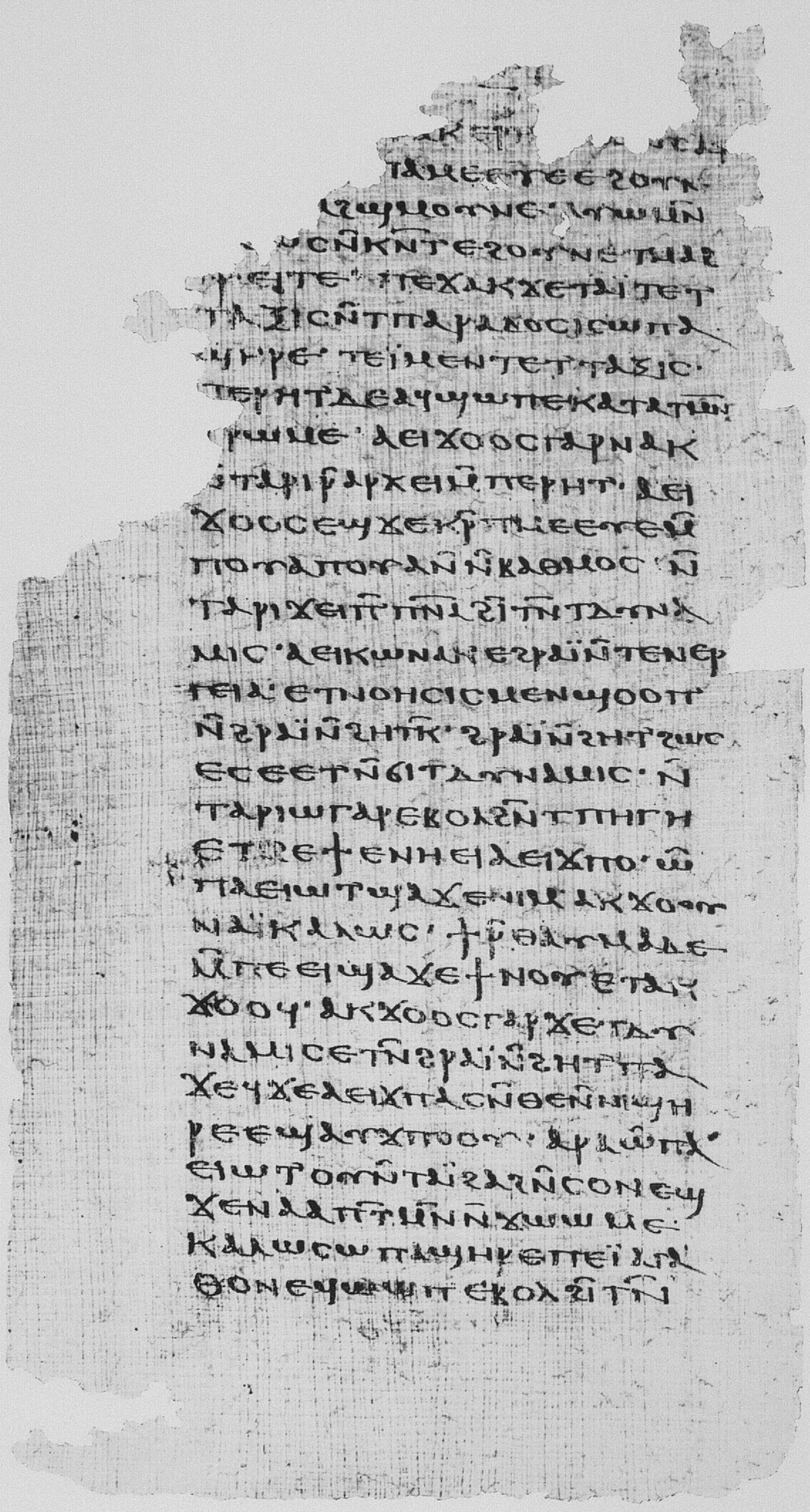
The Gospel of Truth occupies pages 16–43 of Nag Hammadi Codex I — the codex that became known as the Jung Codex after it was purchased by the Carl Gustav Jung Institute in Zurich in 1951 as a birthday gift for Carl Jung. Jung's personal interest in Gnostic literature — extensively documented in his Seven Sermons to the Dead and Aion — makes this the most symbolically charged of all the Nag Hammadi texts. Jung died in 1961 before the full significance of the collection had been assessed; the codex was returned to Cairo in 1975.
Where to Read It
The full text is available free at gnosis.org/naghamm/got.html. The best print translation with full scholarly apparatus is in Marvin Meyer's The Nag Hammadi Scriptures (HarperOne, 2007), translated by Marvin Meyer. Harold Attridge's translation in the Robinson collection (1977) is also widely used.
Did Valentinus write the Gospel of Truth?
Probably, or it was written by someone in his immediate circle. Irenaeus mentions a "Gospel of Truth" among the writings of Valentinus's followers and implies close connection to Valentinus himself. The theological sophistication and poetic quality match ancient reports of Valentinus's gifts. Christoph Markschies's detailed study Valentinus Gnosticus? (1992) is the most thorough examination of the question and concludes with cautious attribution rather than certainty.
Is the Gospel of Truth related to the Gospel of John?
The Gospel of Truth cites or alludes to the Gospel of John more than any other scripture — particularly its opening ("In the beginning was the Word") and its themes of light, truth, and the Word made flesh. Scholars including Attridge and MacRae have documented the extensive Johannine influence on the text. This reflects the Valentinian school's broader affinity for the Gospel of John as the scripture that best supported their theological framework.