The Archons are seven planetary rulers created by the Demiurge to govern the material world in Gnostic cosmology. Not evil by nature — they are agents of ignorance, keeping human souls trapped in matter and preventing their return to the divine Pleroma. Each archon governs one celestial sphere, and after death the soul must answer their questions to ascend toward God.
What Are the Archons? The One-Paragraph Answer
The Archons are the wardens of the material world. In Gnostic cosmology, they are seven beings created by the Demiurge — the flawed lesser god who built the material universe — to help him administer and enforce his rule. They govern the sky, drive the planets, shape human fate through astrology, and intercept souls trying to escape the material world after death. They are not evil in the way a villain is evil. They are ignorant — and because they are ignorant, they are dangerous.
Understanding the Archons is essential to understanding why Gnosticism matters. They are the answer to the question every Gnostic tradition asks: why is the world so wrong? Not because of human sin, not because God abandoned us — but because the world is governed by beings who don't know what they're doing, and who were designed to keep us in the dark.
Where the Word "Archon" Comes From
The word "archon" is not Gnostic jargon — it was an ordinary Greek word for a political magistrate, a civic ruler. In Athens, the nine archons were the chief elected officials of the city-state. The word simply meant "one who rules."
The Gnostics chose this word deliberately. They were making a political statement: the beings who run the cosmos are not gods — they are politicians. They have power, but not legitimacy. They are administrators of a corrupt system, not creators of a good one. By calling them "archons," Gnostics were implying that the universe is governed the way a corrupt Roman province is governed — by officials who answer to a bad ruler and keep the population oppressed.
The apostle Paul, writing decades before the Gnostic schools fully formed, used related terms throughout his letters: archai (principalities), exousiai (authorities), dynameis (powers). These were the beings he warned Christians about in Ephesians 6:12: "Our contest is not against flesh and blood; rather, the authorities of the world and the spiritual hosts of wickedness." The Gnostics read Paul carefully — and took his cosmology further than he intended.
How the Archons Were Created
The Demiurge did not create the Archons from a plan. They emerged from his own ignorance.
According to the Secret Book of John — the most detailed Gnostic cosmological text, found at Nag Hammadi — after the Demiurge (Yaldabaoth) came into being through Sophia's error, he created first twelve authorities and then seven Powers. The seven Powers correspond to the seven classical planets. Each one was given a face, a name, and a domain. Each one was, like their creator, unaware of the divine light that had slipped into their world through Sophia's fall.
This is the crucial point that distinguishes Gnostic Archons from Christian demons. Demons, in orthodox theology, are fallen beings who once knew good and chose evil. The Archons never knew good. They were born from ignorance, and they perpetuate what they were born into.
The Seven Archons — Planets, Days, and Spheres
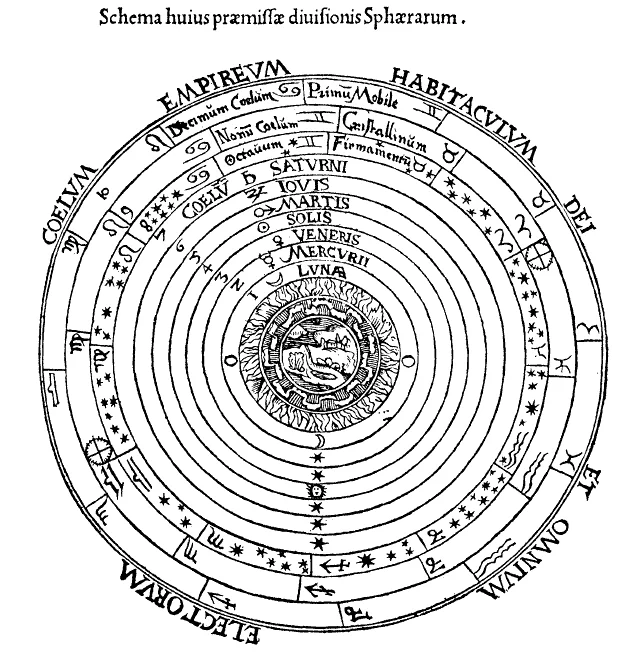
The number seven was not chosen at random. Seven was the number of classical planets known to the ancient world: Saturn, Jupiter, Mars, the Sun, Venus, Mercury, and the Moon. These seven governed the seven days of the week. They also occupied the seven celestial spheres — concentric layers of sky through which the planets moved.
For the Gnostics, this meant the Archons were woven into the fabric of everyday life. Every day of the week was named after one of them. Every moment of fate — astrology was the governing science of the ancient world — was shaped by them.
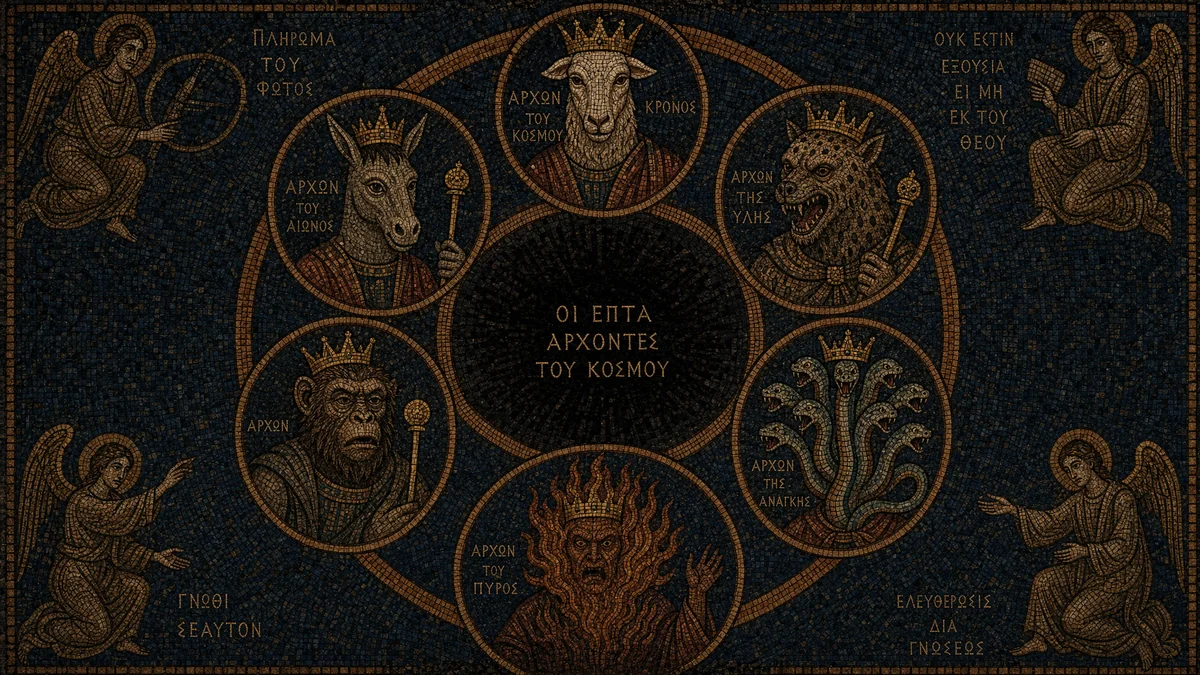
| Archon (Secret Book of John) | Planet | Day | Animal Face | Domain |
|---|---|---|---|---|
| Yaldabaoth (Saklas, Samael) | Saturn | Saturday | Lion | Chief ruler / Demiurge himself |
| Yao | Jupiter | Thursday | Seven-headed snake | Lordship |
| Sabaoth | Mars | Tuesday | Snake | Kingdom |
| Adonaios | Sun | Sunday | Ape | Jealousy |
| Astaphaios | Venus | Friday | Hyena | Divinity |
| Elaios | Mercury | Wednesday | Donkey | Forethought |
| Horaios | Moon | Monday | Sheep | Goodness |
Note that Basilides — the 2nd-century Gnostic teacher in Alexandria — described a different system, with a supreme archon called Abraxas presiding over 365 archons, one for each day of the year. The number of archons varied across traditions; seven was the most common, but it was not universal.
What Do Archons Look Like?
The Gnostic texts don't leave the Archons as abstract concepts — they describe them in vivid, deliberately unsettling detail.
The Reality of the Rulers (also called the Hypostasis of the Archons), a Nag Hammadi text, states that the archons "have bodies that are both female and male, and faces that are the faces of beasts." Nicola Denzey Lewis, in her Introduction to Gnosticism (2013), notes that this kind of boundary-crossing — neither male nor female, neither human nor animal — was deeply threatening to ancient sensibilities. It marked the Archons as forces of chaos, as far from the true God's ordered perfection as a created being could be.
The Apocryphon of John is even more specific, describing the Seven Powers in order:
- Athoth — the face of a sheep
- Eloaios — the face of a donkey
- Astaphaios — the face of a hyena
- Yao — the face of a seven-headed snake
- Sabaoth — the face of a snake
- Adonin — the face of an ape
- Sabbataios — the face of flaming fire
How the Archons Control Human Life
The Archons don't govern from a distance — according to Gnostic teaching, they operate inside you.
Their primary mechanism was astrological fate. The planets — which the Archons governed — were understood in the ancient world as the direct cause of human character and destiny. Hans Jonas, in The Gnostic Religion, describes this as the Archons' central tool: "Astrological fate is the law they administer, the tool of their dominion." Every personality trait, every passion, every compulsion was thought to derive from the planets under which a person was born. The Archons had engineered this system specifically to keep souls bound to matter.
But it went deeper than astrology. According to gnosticismexplained.org's analysis of the Gnostic texts, the Archons had also engineered human beings from the start to be maximally susceptible to their influence. They built the capacity for blind obedience, lust, anger, and fear directly into human bodies. Only the divine spark — the fragment of Sophia's divine light accidentally trapped in matter — gave any resistance at all.
This is why gnosis was so urgent. It was not a luxury — it was the only exit from a system designed to have none.
The Soul's Gauntlet — Escaping the Archons After Death
Death, for the Gnostics, was not an escape from the Archons. It was the moment they became most dangerous.
When a Gnostic soul left the body, it began ascending through the seven celestial spheres toward the Pleroma — the divine realm above. But each sphere was a checkpoint. The Archon who ruled that sphere would confront the ascending soul and demand it answer a series of questions before allowing it to pass. If the soul couldn't answer correctly — if it hadn't achieved gnosis — the Archon could trap it and force it back into the material world for another cycle of incarnation.
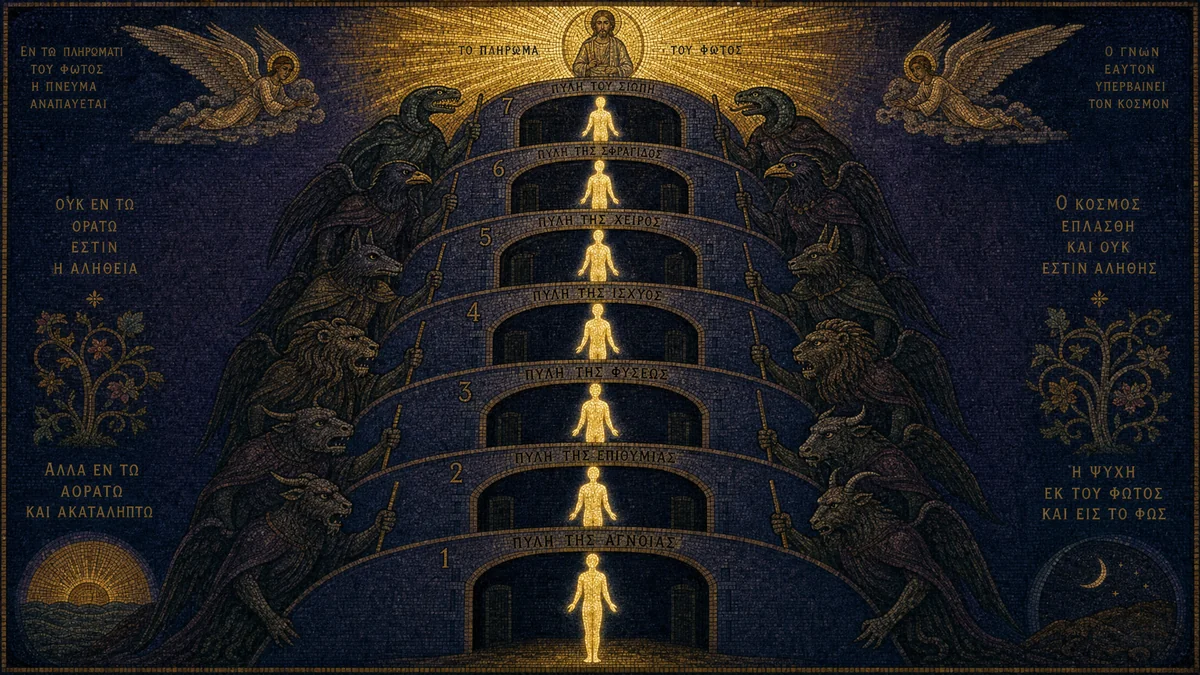
The First Apocalypse of James (also called the First Revelation of James — Nag Hammadi Codex V) actually records the passwords — the exact declarations a soul must make when confronted by the gatekeepers. The text frames the Archons as toll-collectors stationed at cosmic gates, demanding an accounting of every soul that tries to pass. Jesus teaches James precisely what to say.
In this text, the soul faces three toll-collectors (not all seven — the text focuses on the critical moments of challenge). Jesus gives James the core formula:
I am a child of the Father, the one who existed before all things. I came from the light, from the place where the light entered into being through itself alone, and I am returning to my place.
A second formula from the same text addresses what the Archons call "alien things" — material attachments, passions, and false identities the soul has accumulated. Jesus instructs James to acknowledge that these things are not truly his but belong to Achamoth (the fallen Sophia), not to the Pre-existent Father. By correctly identifying what belongs to matter and what belongs to the divine realm, the soul strips the toll-collector of any legal claim over it.
Other Gnostic texts give more elaborate formulas for each individual Archon. The Gospel of Mary depicts the soul arguing against four Powers in succession, each claiming a different hold — Darkness, Desire, Ignorance, and the Wrath of Death — and refuting each in turn. In the Pistis Sophia, Sophia recites thirteen separate repentances as she passes through hostile cosmic zones. The principle is consistent across all these texts: the soul cannot be held by a power whose nature it understands and can name.
Gnosis is the substance behind every formula. A soul reciting the password without genuine knowledge of its divine origin gains nothing. A soul that knows — truly knows — what it is does not need the formula at all.
This is why gnosis was called "saving knowledge." It was not just spiritual enlightenment in a vague sense — it was literally the knowledge needed to navigate the afterlife gauntlet and reach God.
Are Archons in the Bible?
Yes — and not obliquely. The word "archon" appears in the Gospel of John.
John 12:31 quotes Jesus: "Now is the judgment of this world; now the archon of this world will be driven out." The same term appears in John 14:30 and 16:11. John calls Satan "the archon of this world" — the ruler of this world — using the exact same Greek word the Gnostics would later use for their planetary rulers.
Paul uses a cluster of related terms throughout his letters — archai, exousiai, dynameis, kyriotetes — all describing spiritual beings that rule the world in opposition to God. Simone Pétrement, in A Separate God (1990), argues that the Gnostics essentially took Paul's cosmology literally and systematized it. Paul assumed these evil "powers" existed without explaining them fully. The Gnostics built a complete mythology around them.
Even Irenaeus of Lyons — the Church Father who wrote five volumes attacking Gnosticism — believed in the existence of seven angels presiding over the seven celestial spheres. The Gnostics and their orthodox opponents shared more cosmological assumptions than the heresy debates let on.
Archons vs. Demons — What's the Difference?
People often assume archons are just Gnostic demons. They're not — and the distinction matters.
Gnostic Archons were never good. They were born from ignorance and have never known anything else. They don't corrupt human souls out of hatred — they do it because it's the only world they know. They are incompetent cosmic bureaucrats, not scheming villains.
The Gnostic texts themselves make this point through dark humor. The Reality of the Rulers presents the Archons as buffoons: they "huff and puff like storm winds" trying to breathe life into Adam and fail; they think they're raping Eve when they're actually assaulting an image she left behind; they call out for Adam and Eve after the couple has already hidden from them. They are powerful, yes — but they're also fools who don't understand what they're dealing with.
This is precisely what makes gnosis so effective against them. A soul that knows its divine origin is beyond their jurisdiction. They have authority only over ignorance. Knowledge dissolves their power entirely.
Archons in Modern Culture
The word "archons" has had a second life in modern conspiracy culture — one that diverges significantly from its Gnostic origins.
Historical Gnosticism was a religious tradition, not a political one. The Archons were not secret rulers of earthly governments — they were cosmic forces encoded into the structure of existence itself, and the response to them was not political resistance but spiritual awakening through gnosis. The Gnostics were not trying to overthrow Rome; they were trying to transcend matter entirely.
The two uses of the word share an imagery but not a worldview. For historical accuracy — which is what this site aims for — the Archons are beings from 2nd-century Gnostic cosmology, and their "defeat" is achieved through the direct knowledge of one's divine origin, not through any external action.
Frequently Asked Questions
What are the Archons in simple terms?
The Archons are seven planetary rulers created by the Demiurge in Gnostic cosmology. They govern the material world, shape human fate through the planets, and guard the celestial spheres that souls must pass through after death. They are not evil by nature — they are beings born from ignorance who perpetuate the Demiurge's flawed creation.
Why are there seven Archons?
Seven corresponds to the seven classical planets known in antiquity: Saturn, Jupiter, Mars, the Sun, Venus, Mercury, and the Moon. These seven planets governed the seven days of the week and the seven celestial spheres. By assigning one Archon to each, Gnostics mapped their cosmology directly onto the structure of time and the visible sky — making the Archons present in every day of every week.
Who is the chief Archon?
In most Gnostic traditions, the chief Archon is Yaldabaoth — also known as Saklas ("fool") and Samael ("blind god"). He is, in fact, the Demiurge himself: the flawed creator god who built the material world. He governs Saturn and the outermost sphere, and it is he who declared "I am a jealous God and there is no other God besides me" — a claim the Gnostics saw as proof of his ignorance of the true God above him. The Basilidean tradition instead named Abraxas as the supreme archon over 365 others.
Are Archons mentioned in the Bible?
Yes. The Gospel of John uses the exact Greek word archon, calling Satan "the archon of this world" (John 12:31, 14:30, 16:11). Paul uses related terms throughout his letters — archai (principalities), exousiai (authorities), dynameis (powers) — to describe the evil spiritual rulers of this world. The Gnostics built their detailed mythology of seven planetary archons on top of this existing New Testament framework.
How do Gnostics escape the Archons?
Through gnosis — direct personal knowledge of one's divine origin. In life, gnosis breaks the Archons' grip on the mind by revealing their illegitimacy. After death, gnosis provides the "passwords" a soul needs to answer each Archon's questions at the celestial sphere checkpoints and pass through to the Pleroma. Without gnosis, the soul is trapped and returned to material existence. The First Apocalypse of James (NHC V) records these passwords verbatim: the soul must declare "I am a child of the Father, the one who existed before all things. I came from the light, from the place where the light entered into being through itself alone, and I am returning to my place."
What is the difference between Archons and the Demiurge?
The Demiurge is the creator of the material world — the flawed lesser god who built matter out of ignorance. The Archons are his subordinates — beings he created to help govern his creation. In most systems, the chief Archon is the Demiurge himself (Yaldabaoth), with six more beneath him. Think of the Demiurge as the corrupt governor and the Archons as his regional administrators — all part of the same illegitimate system.