The Cathars were a Christian dualist movement that flourished in southern France and northern Italy between the 12th and 14th centuries. They believed in two gods — a good God of spirit and an evil god (Rex Mundi, "King of the World") who created the material world. The Catholic Church launched the Albigensian Crusade against them in 1209, and the subsequent Inquisition eradicated the movement by around 1325. Thousands were burned alive, including 220 Perfecti at Montségur in 1244.
Who Were the Cathars?
The people history calls Cathars never called themselves that — they called themselves Good Christians (Bons Chrétiens), and they believed they were the only ones. "Cathar" comes from the Greek katharoi, meaning "the pure ones" — a label applied by the Church, used by the Inquisition, and inherited by history. In their own records they were simply the Good Men and Good Women (Bons Hommes, Bonnes Femmes), or sometimes just Christians.
The movement took root in the mid-12th century, first recorded in Cologne in 1143 by the cleric Eberwin of Steinfeld, who wrote to Bernard of Clairvaux describing a community that rejected Catholic sacraments and claimed to follow the true teachings of Christ. Within decades, similar communities had appeared across the Rhineland, northern France, and — most significantly — the Languedoc region of southern France and the cities of northern Italy.
The Cathars were also called Albigensians, after Albi, the city in the Languedoc where the movement first established a visible presence. In the Languedoc they found a tolerant political culture and a nobility that often protected them. By the late 12th century, Malcolm Lambert estimates in The Cathars (1998), the movement counted thousands of committed members and a much larger sympathetic lay population.
Two Gods — and One of Them Created the World
The Cathars believed in two gods — and the one Catholics worshipped was the evil one. This is the claim that put them beyond the reach of any reconciliation with Rome.
The good God was the God of the New Testament: purely spiritual, entirely good, the creator of souls and the realm of light. This God had nothing to do with the material world. The material world — everything visible, tangible, and mortal — was the creation of a second god, whom the Cathars called Rex Mundi: "King of the World." Rex Mundi was the God of the Old Testament: a jealous, violent, material deity whose creation was inherently corrupt. To the Cathars, the God the Catholic Church called the Father was a devil.
Human souls, in this cosmology, are sexless angelic spirits who fell from the realm of light and became trapped in material bodies — condemned to be reincarnated lifetime after lifetime until they find liberation. This places Catharism within the same broad tradition as the ancient Gnostic creation myths: matter is a prison, the soul a spark of divine light that does not belong here, and the demiurge — Rex Mundi — the false creator who built the cage.
On the nature of Jesus, Cathars held a Docetic view: he was not truly incarnate. His body was an illusion — a divine being cannot be contaminated by matter. He did not suffer physically on the cross, and he did not physically rise from the dead. What the Catholic Church called the central mystery of salvation, the Cathars called a misunderstanding.
The Perfecti — Living Like Angels
The Cathars were not a uniform community. They were divided into two tiers: the Perfecti (the perfect ones, singular perfectus/perfecta) and the Credentes (the believers). The gap between them was total.
The Perfecti were the spiritual elite — those who had received the consolamentum and committed to a life of complete asceticism. They ate no meat, no eggs, no dairy. They kept no property and maintained no sexual relationships. They spent their days in prayer, fasting, teaching, and administering the consolamentum to others. They were, in the Cathar understanding, living as angels already — inhabiting bodies but no longer of the body.
One of the most radical features of Catharism was that women could become Perfecti. Female Perfectae led communities, administered sacraments, and held spiritual authority equal to male Perfecti. This was not a marginal feature — it was central to the movement's appeal among women of the Languedoc nobility. The Catholic Church offered women no equivalent role. Emmanuel Le Roy Ladurie's landmark study Montaillou (1975), drawing on Inquisition records, documents communities where female Perfectae were the centre of religious life.
The most extreme expression of Cathar logic was the endura — voluntary fasting to death after receiving a deathbed consolamentum. If a dying person received the consolamentum and then recovered, they were bound by the Perfecti's vows but in a body too weak to keep them perfectly. Some chose to complete the liberation by refusing all food. The endura was not common, but it was not condemned — it was seen as the ultimate act of spiritual consistency.
The Consolamentum — The One Sacrament That Mattered
The Cathars had only one sacrament — the consolamentum — and it replaced everything the Catholic Church offered. No baptism, no eucharist, no confession, no last rites. One rite, one moment of transformation.
The ritual was simple. A Perfectus placed the Gospel of John on the recipient's head, laid hands on them, and recited prayers. The recipient confessed their sins and received the Holy Spirit directly, without priestly mediation, without water, without any material element. The Rituel Cathare de Lyon — one of the very few surviving Cathar texts — preserves a version of this ceremony, describing it as a spiritual baptism in the tradition of John the Baptist.
Most Credentes — ordinary believers — chose not to receive the consolamentum until they were dying. This was entirely rational within the Cathar system: once received, the consolamentum bound the recipient to the full ascetic life of the Perfecti. By waiting for the deathbed, a Credente could live normally — marry, eat meat, own property — and still die pure. The Catholic Church found this arrangement maddening. It meant ordinary Cathars owed nothing to Catholic clergy for their entire lives.
Where Did Catharism Come From?
The Cathars did not emerge from nowhere — their dualism arrived in southern France along the same trade routes that carried silk and spice from the Byzantine East. Most scholars trace the direct ancestry of Catharism to the Bogomils of Bulgaria: a dualist Christian movement that emerged in the 10th century, itself influenced by earlier Eastern dualist traditions including Paulicianism (Armenia) and, further back, Manichaean ideas.
The Council of Saint-Félix-Lauragais in 1167 — a landmark gathering of Cathar leaders in southern France — was attended by a Bogomil bishop named Nicetas, who traveled from Constantinople to provide ecclesiastical legitimacy to the western communities. Malcolm Lambert describes this as "beyond reasonable doubt" evidence of direct transmission from Bogomilism to Catharism. The Bogomils, in turn, had absorbed Manichaean dualism through Bulgarian contact with the Byzantine east.
Whether this makes Catharism "Gnostic" is genuinely contested. Wikipedia labels it "pseudo-Gnostic" — a classification that reflects a real scholarly dispute. Cathars shared key features with ancient Gnosticism: the two-creator framework, the soul as trapped divine spark, and the rejection of matter. But they had no connection to the Nag Hammadi texts, no Sophia myth, no Demiurge cosmology of the kind found in Sethian Gnosticism. Mark Pegg argues the connection is largely a modern scholarly projection. Most historians settle for "influenced by a tradition that goes back through Manichaeism to ancient Gnosticism" rather than claiming direct descent.
The Albigensian Crusade — Christians Killing Christians
In 1209, Pope Innocent III launched a crusade — not against Muslims in the Holy Land, but against Christians in southern France. It was the first crusade in European history directed against a Christian population, and it set a precedent the Church would follow for centuries.
The trigger was the murder of Pierre de Castelnau, Innocent's papal legate to the Languedoc, in January 1208. Castelnau had been trying — and failing — to persuade Count Raymond VI of Toulouse to suppress the Cathars in his territory. When he was killed by one of Raymond's knights on his return journey, Innocent declared him a martyr and announced the crusade. Northern French nobles, attracted by promises of indulgences and the lands of heretic-protecting southern lords, answered the call.
On 22 July 1209, the crusading army reached the city of Béziers. The city contained both Catholics and Cathars — but the attackers, finding the gates open after an ill-judged sortie by the defenders, poured in and killed indiscriminately. The number of dead is estimated between 7,000 and 20,000. The Cistercian legate Arnaud Amaury is reported to have responded to the question of how to distinguish Cathars from Catholics with the words: "Kill them all — God will recognise His own" (Caedite eos. Novit enim Dominus qui sunt eius.). The quote first appears in the chronicle of Caesarius of Heisterbach, written fifteen years after the event, and may be apocryphal — but the massacre was real.
The Inquisition and the End
The crusade weakened Catharism. The Inquisition finished it. Pope Gregory IX established the Medieval Inquisition in 1231, specifically targeting the remaining Cathar communities of the Languedoc. Where the crusade had used armies, the Inquisition used interrogation — methodical, patient, and lethal.
The most famous inquisitor of the period was Bernard Gui, who operated in Languedoc from 1307 to 1324. His Practica Inquisitionis is both a manual for identifying heretics and an invaluable record of Cathar beliefs in their final years — a document that, with its exhaustive transcriptions of testimony, preserves more detail about Cathar life than any source the Cathars themselves left.
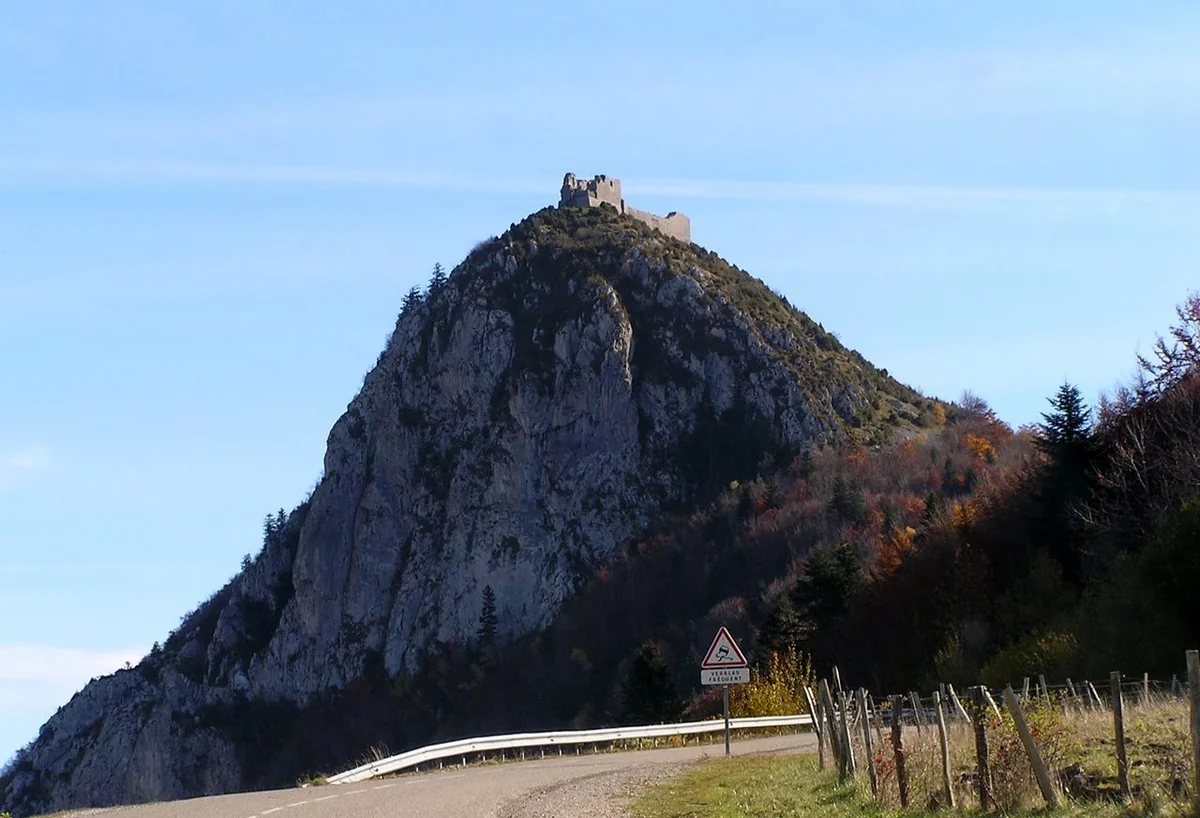
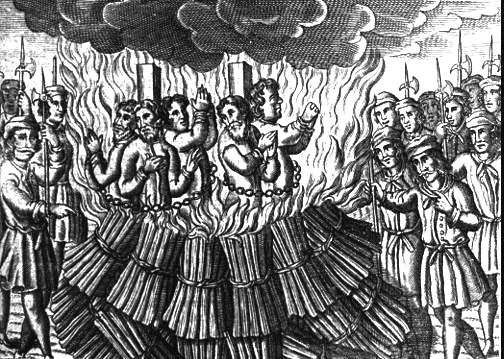
The symbolic end came at Montségur — a mountain fortress in the Ariège that had become the last refuge of the Cathar hierarchy. After a ten-month siege it fell in March 1244. The defenders were offered their lives if they recanted. Two hundred and twenty Perfecti refused. They descended from the castle, walked into a field at the foot of the mountain, and were burned alive together. The field is still called the prat dels cremats — the field of the burned.
The last known living Perfectus was Guillaume Bélibaste, captured and burned at Villerouge-Termenès in 1321. The last recorded Cathar community was documented around 1325 in the Languedoc village of Montaillou — the village that Emmanuel Le Roy Ladurie reconstructed in forensic detail from Inquisition records in his 1975 masterpiece of the same name.
Did Catharism Really Exist?
Almost everything we know about the Cathars was written by people who wanted them dead. This is the foundational problem of Cathar studies — and it has led to a genuine scholarly controversy about how much of "Catharism" as we understand it was constructed by its enemies.
Mark Pegg, in A Most Holy War (2008), argued that "Catharism" as a unified, self-conscious religion is partly a Church invention and partly a construct of 19th-century historians who needed a coherent label for what were actually scattered, locally varying communities. The Inquisition records describe villages with heterodox beliefs — but not necessarily adherents of a single organised system. Pegg suggests the Church created "Catharism" as a heresy in order to justify attacking it.
Claire Taylor and Malcolm Lambert counter: thousands of people in the Languedoc died for these beliefs rather than recant them. The movement — whatever we call it — was real enough to inspire that level of commitment. The debates are about category and continuity, not about whether people with dualist convictions existed and were persecuted. Lambert's position: "That there was a substantial transmission of ritual and ideas from Bogomilism to Catharism is beyond reasonable doubt."
Frequently Asked Questions
Were the Cathars actually Gnostic?
It depends on the definition. Cathars shared structural features with ancient Gnosticism: dualism, matter as evil, the soul as trapped divine spark, and a creator god distinct from the true God. But they had no connection to the 2nd-century Gnostic texts found at Nag Hammadi, and their theology was simpler and more folk-Christian than Sethian or Valentinian Gnosticism. Most scholars describe Catharism as part of a broader dualist tradition that includes Manichaeism and Gnosticism, without claiming direct doctrinal descent. Wikipedia's classification is "pseudo-Gnostic," which reflects this ambiguity.
What happened at Montségur?
Montségur was a mountain fortress in the Ariège that had become the last stronghold of the Cathar hierarchy. It fell after a 10-month siege in March 1244. Two hundred and twenty Perfecti — men and women — were offered their lives if they recanted their beliefs. All refused. They walked down from the fortress, entered a field at the foot of the mountain, and were burned alive together. The site is still called the prat dels cremats — the field of the burned. It remains a pilgrimage site for those interested in Cathar history.
Did the Cathars really say "Kill them all, God will know His own"?
The quote is attributed to the Cistercian legate Arnaud Amaury at the massacre of Béziers in 1209. It first appears in the chronicle of Caesarius of Heisterbach, written fifteen years after the event, and may be apocryphal — Arnaud Amaury himself never recorded saying it. What is not disputed is the massacre itself: thousands of people, both Cathars and Catholics, were killed when the crusading army entered Béziers. The quote may be invented, but the event it describes was real.
What is the consolamentum?
The consolamentum was the only Cathar sacrament — a spiritual baptism performed by the laying on of hands while the Gospel of John was held over the recipient's head. It replaced all Catholic sacraments in a single rite. Receiving it made the recipient a Perfectus, bound to a life of complete asceticism. Most ordinary Cathars (Credentes) waited until they were on their deathbed to receive it, so they could live normally and still die in a state of spiritual purity.
Did Catharism survive anywhere?
Not as an organised religion. The last known Perfectus, Guillaume Bélibaste, was burned in 1321. The last recorded Cathar community was documented around 1325 in the Languedoc. No continuous tradition survived into the modern period. However, several neo-Cathar movements exist today — particularly in the Languedoc region — that draw on Cathar history and theology as a spiritual inspiration, though these have no direct institutional continuity with the medieval movement.
Why did the Catholic Church fear the Cathars so much?
Several reasons. First, Catharism provided a complete alternative to the Catholic Church — its own clergy (the Perfecti), its own sacrament (the consolamentum), and its own theology. It did not merely dissent from Catholicism; it replaced it. Second, the Cathars openly called the Catholic God a devil — Rex Mundi, the evil creator of matter. Third, the Cathar system undermined priestly authority entirely: no confession, no purgatory, no need for Catholic mediation between the believer and God. And fourth, it was spreading successfully among the nobility and townspeople of the most prosperous region of France.