Carl Jung (1875–1961) was deeply influenced by Gnosticism throughout his career. He saw in ancient Gnostic mythology a symbolic language for the processes of the unconscious — a pre-scientific attempt to describe what he called individuation, the shadow, and the Self. His Seven Sermons to the Dead (1916) is written in the voice of the Gnostic teacher Basilides, using Gnostic terms like Abraxas and Pleroma as psychological concepts. Jung considered Gnosticism the closest ancient parallel to his own depth psychology.
How Jung Discovered Gnosticism
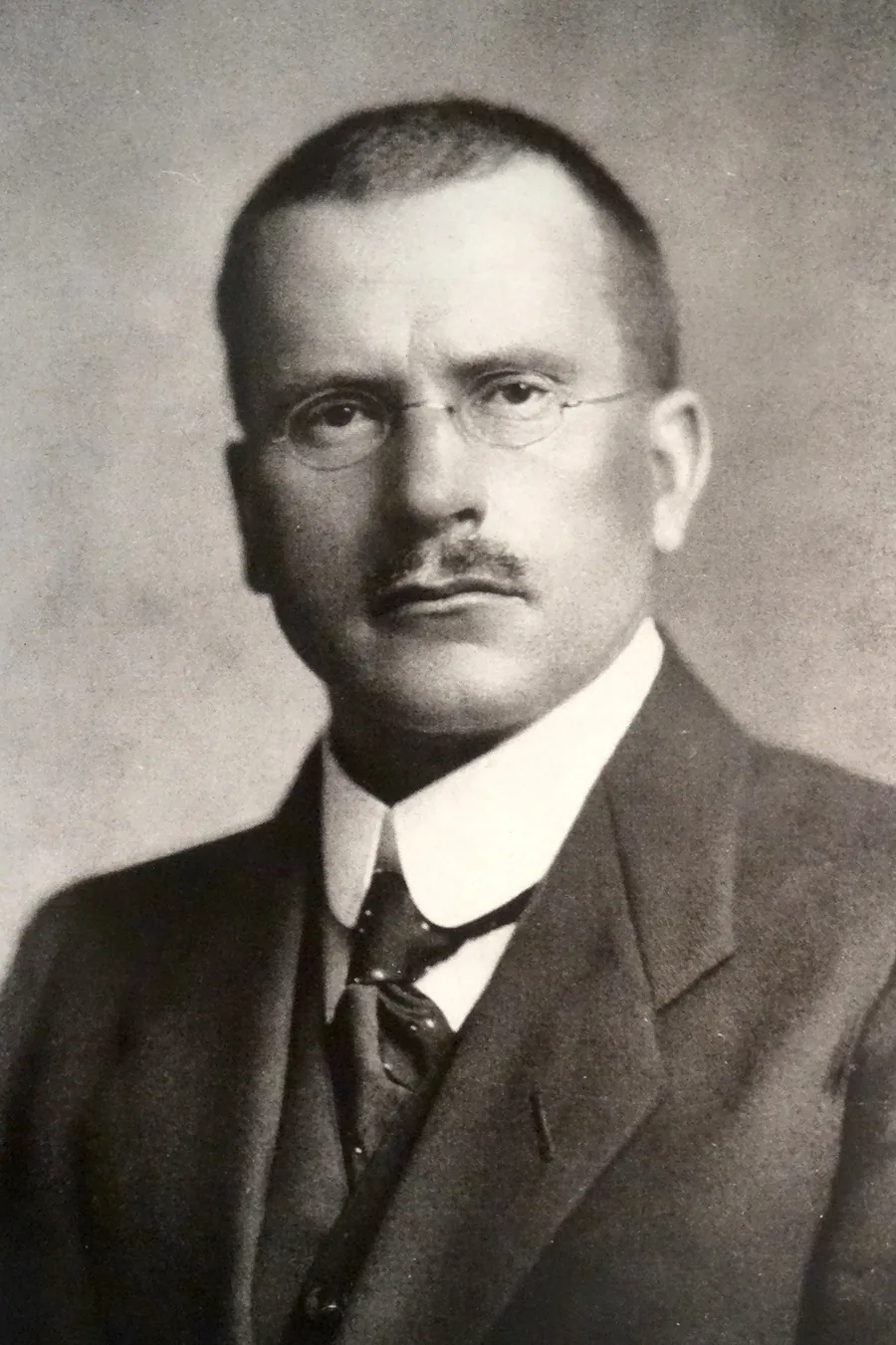
Jung's encounter with Gnosticism was not academic — it was personal and visionary. From 1913 to 1917, following his break with Freud, Jung entered what he later called his "confrontation with the unconscious" — a period of intense inner experience that he recorded in what became the Red Book (Liber Novus). In the midst of this crisis, he received a vision of the dead — "the spirits of those who had died and yet had not achieved integration" — seeking answers about the nature of God and the cosmos. His response was the Seven Sermons to the Dead.
He wrote these sermons in the voice of Basilides — the 2nd-century Alexandrian Gnostic teacher — using Gnostic terminology throughout. This was not an accident of style. Jung had been reading Gnostic texts in the context of his study of mythology, alchemy, and the history of religion, and recognised in them a symbolic vocabulary that matched what he was experiencing internally.
The Seven Sermons to the Dead
The Septem Sermones ad Mortuos (1916) is the most explicitly Gnostic text Jung ever produced. Written in archaic, visionary prose and privately circulated for decades before its eventual publication, it introduces two key Gnostic concepts that Jung would deploy throughout his later work:
The Pleroma — in Gnosticism, the divine fullness, the totality of the divine realm. Jung adopted this as a symbol for the undifferentiated unconscious: the pre-creative totality from which all opposites arise. He warned that immersion in the Pleroma — attempting to dissolve the individual ego back into the all — leads to psychological dissolution rather than integration. The goal of individuation is not to return to the Pleroma but to consciously differentiate oneself from it while remaining aware of one's origin there.
Abraxas — in Basilides's Gnosticism, the supreme deity whose name sums to 365. Jung reinterpreted Abraxas as the symbol of the union of opposites: a force that is simultaneously God and Devil, creative and destructive, light and darkness. Abraxas, Jung wrote, "is more indefinite still than god and devil... an improbable probability, unreal reality." This concept anticipates his later work on the coincidentia oppositorum — the union of opposites at the heart of the Self.
Gnostic Concepts in Jungian Psychology
The influence of Gnosticism on Jung went far beyond the Seven Sermons. Several of his most important psychological concepts have direct Gnostic parallels:
| Gnostic concept | Jungian equivalent | Meaning |
|---|---|---|
| Pleroma | Collective unconscious | The pre-differentiated totality from which psychic contents emerge |
| Gnosis | Individuation | Direct self-knowledge leading to wholeness |
| Divine spark / pneuma | The Self | The transcendent centre of the psyche beyond the ego |
| Archons | Complexes / autonomous complexes | Psychic forces that govern the personality against the ego's will |
| Abraxas | The union of opposites / Self | The psychic totality that transcends good and evil |
| Demiurge | Ego inflation / false Self | A partial identity mistaking itself for the whole |
The Red Book and Gnostic Imagery
Jung's Red Book — the illustrated manuscript he worked on from 1914 to around 1930 and which was not published until 2009 — is saturated with Gnostic imagery: serpents, divine figures, underground journeys, encounters with the shadow, and confrontations with autonomous forces within the psyche. Scholars including Stephan Hoeller and Sonu Shamdasani (who edited the critical edition of the Red Book) have documented the extent to which Jung was drawing on Gnostic, alchemical, and mythological symbolism during this period.
Jung himself wrote that the Gnostics "had something I was looking for" — a pre-Christian tradition that took the inner life seriously as a source of knowledge about ultimate reality, rather than treating it as an obstacle to be overcome. He felt that official Christianity had suppressed the inner dimension of religion, and that Gnosticism had preserved it, however imperfectly.
Was Jung a Gnostic?
Jung was not a Gnostic in any religious sense — he did not accept Gnostic cosmology as literally true. He was a psychologist using Gnostic symbols as psychological descriptors. His approach was consistently interpretive: what Gnostics called the Demiurge, he read as a psychological projection; what they called the divine spark, he read as a symbol of the Self.
Scholars including Robert Segal and Gilles Quispel (who helped bring Jung the Nag Hammadi Jung Codex in 1951) have debated the degree of influence in both directions. Quispel argued that Jung essentially rediscovered, in psychological language, what the Gnostics had mapped in mythological language. Critics like Philip Lee (Against the Protestant Gnostics, 1987) argued that Jung's reading of Gnosticism was selective and distorted by his therapeutic framework.
Jung and the Nag Hammadi Discovery
The connection between Jung and Gnosticism became literal in 1951, when the Dutch scholar Gilles Quispel — a member of the international team working on the Nag Hammadi texts — arranged for the Jung Institute in Zurich to purchase one of the codices as a birthday gift for Jung. Codex I became known as the "Jung Codex" and spent 24 years in Zurich before being returned to Cairo in 1975. It contains the Gospel of Truth — the text most closely associated with Valentinus, the most sophisticated Gnostic theologian. Jung died in 1961 before the full significance of the Nag Hammadi discovery had been assessed.
Frequently Asked Questions
What did Jung say about Gnosticism?
Jung wrote that Gnosticism was a form of psychological self-knowledge expressed in mythological language — that the Gnostics were describing real inner experiences but projecting them outward onto a cosmic screen. He saw the Gnostic divine spark as a symbol of the Self, the Archons as autonomous complexes, and the Demiurge as the inflated ego mistaking itself for the totality. His key writings on Gnosticism include the Seven Sermons to the Dead (1916), Aion (1951), and Answer to Job (1952).
What is the Seven Sermons to the Dead?
A short visionary text written in 1916, privately published, and attributed by Jung to "Basilides in Alexandria, the City where the East toucheth the West." It uses Gnostic terminology — Pleroma, Abraxas, Creatura — to describe the structure of the psyche. Jung later included it as an appendix in his autobiography Memories, Dreams, Reflections (1962). It is available free at gnosis.org/library/7Sermons.htm.
What is the Jung Codex?
Nag Hammadi Codex I — purchased by the Carl Gustav Jung Institute in Zurich in 1951 as a birthday gift for Jung, through the mediation of Gilles Quispel. It contains the Gospel of Truth, the Prayer of the Apostle Paul, and other texts. It was returned to the Coptic Museum in Cairo in 1975 after a legal dispute following Jung's death. See our full account in the Nag Hammadi Library article.