The Pistis Sophia is one of the most important Gnostic texts ever discovered — a lengthy Coptic manuscript preserved in the Askew Codex (British Library) in which the risen Jesus teaches his disciples, including Mary Magdalene, the higher mysteries of the Gnostic cosmos. Its title means roughly "Faith-Wisdom" — a name given to the divine being whose fall and redemption form the heart of the text.
What Is the Pistis Sophia?
The Pistis Sophia is a Gnostic dialogue text in which the risen Jesus — eleven years after the resurrection, when he has finally received his "true garment" of light — reveals the higher mysteries to his assembled disciples. Mary Magdalene is the most prominent questioner, contributing more than half the dialogue. The text covers Gnostic cosmology, the soul's fate after death, the nature of repentance and redemption, and an elaborate myth about the divine being Pistis Sophia herself.
The title is ambiguous in Greek and Coptic. Pistis means faith, trust, or loyalty; Sophia means wisdom. Possible readings include "Faith-Wisdom," "Wisdom's Faith," or "The Loyalty of Sophia." The scholarly consensus favours "Faith-Sophia" — treating Sophia not just as a concept but as the proper name of a divine being, whose faith (or trust in the light) defines her character.
The Askew Codex — The Manuscript
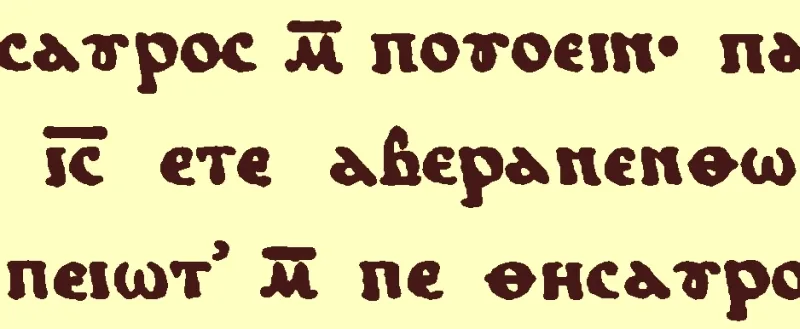
The Pistis Sophia survives in a single manuscript: the Askew Codex, a Coptic parchment codex of 174 surviving leaves (originally 178). It was purchased by the British Museum in 1785 from the estate of Dr Anthony Askew — an English physician and book collector who had acquired it in 1773. The codex was the first major Gnostic manuscript known to Western scholars, predating the Nag Hammadi discovery by 172 years.
Until 1945, the Askew Codex — along with the Bruce Codex and the Berlin Codex — contained almost all the Gnostic writing that had survived the suppression of such literature across the ancient world. Everything written about Gnosticism before 1945 was based primarily on these three manuscripts and the hostile accounts of Church Fathers.
Contents — Four Books
The Pistis Sophia is divided into four books, though scholars debate whether all four originally belonged together:
- Books 1–2: The myth of Pistis Sophia — her fall from the thirteenth aeon (through misplaced trust in the light), her twelve prayers of repentance, and her eventual restoration. Each prayer is paralleled by a disciple's interpretation of a Psalm or Ode of Solomon.
- Book 3: Jesus continues teaching the mysteries, describing the fate of souls after death — the Amente (underworld), the Archons who judge souls, and the rewards and punishments of various types of people.
- Book 4: A somewhat different tradition, dealing with the baptisms of fire, water, and spirit, and the higher initiation mysteries of the "Treasury of Light."
The Fall and Redemption of Pistis Sophia
The central myth of the text is one of the most developed versions of the Sophia narrative in all Gnostic literature. Pistis Sophia dwells in the thirteenth aeon — just outside the true divine Pleroma — when she is deceived by a false light projected by the Archon Authades ("the Arrogant One"). Trusting what she believes is the true light, she descends into the material chaos. There she is tormented by multiple Archons and cries out twelve prayers of repentance — songs of suffering and longing for rescue.
Jesus, the "First Mystery," hears her prayers and sends his light-powers to rescue her. After each prayer she is partially restored; after the twelfth she is fully brought back to the thirteenth aeon. The myth encodes the Gnostic understanding of the soul's situation: the soul (Sophia) is in matter through its own error, its rescue depends on the divine response to its cry, and restoration requires persistent repentance and recognition of error.
O Light of lights, in whom I have had faith from the beginning, hearken now, O Light, unto my repentance. Save me, O Light, for evil thoughts have entered into me. I looked, O Light, into the lower parts, and I saw there a light, and I thought: I will go to that region, in order that I may take that light. And I went and found myself in the darkness which is in the chaos below.
Mary Magdalene in the Pistis Sophia
Mary Magdalene plays an extraordinary role in this text — far greater than in any canonical Gospel. She asks more questions than all other disciples combined and consistently provides the most penetrating interpretations of Pistis Sophia's repentances. Jesus praises her repeatedly as one who will "rule over all my disciples" and "the one whose heart is more directed to the Kingdom of Heaven than all your brothers."
The Pistis Sophia thus preserves a tradition of Mary Magdalene as a leading spiritual authority — a tradition also visible in the Gospel of Mary and Gospel of Philip. Karen L. King's The Gospel of Mary of Magdala (2003) argues that the prominence of Mary Magdalene in these texts reflects actual communities in early Christianity where women held spiritual leadership roles.
Cosmology and the Soul's Journey
The Pistis Sophia describes an elaborate post-mortem cosmology in which souls are judged by the Archons of the various spheres, punished for specific sins, and eventually reincarnated — or, for the initiated, released into the Treasury of Light. The text gives specific details about which sins lead to which punishments, and which "mysteries" (ritual knowledge, seals, and names) enable the soul to bypass the Archon-judges and ascend directly.
This cosmology is more systematised than in the Secret Book of John and shows evidence of development from multiple source traditions. The "Treasury of Light" — the final destination of perfected souls — is presented as the true divine realm that corresponds to the Pleroma in other Gnostic texts.
Where to Read the Pistis Sophia
The standard scholarly translation is G.R.S. Mead's (1921), available free at gnosis.org/library/pistis-sophia.htm. Violet MacDermot's translation (Brill, 1978) is the most recent critical scholarly edition and the preferred academic reference. A partial translation by Carl Schmidt was published in German in 1925.
Frequently Asked Questions
Is the Pistis Sophia part of the Nag Hammadi Library?
No. The Pistis Sophia is preserved in the Askew Codex (British Library), not the Nag Hammadi Library. The Nag Hammadi texts were discovered in Egypt in 1945; the Askew Codex reached the British Museum in 1785. A shorter, simpler mention of Pistis Sophia does appear in the Nag Hammadi Sophia of Jesus Christ, but the main Pistis Sophia text is entirely separate.
Who wrote the Pistis Sophia?
The author is unknown. The text shows signs of compilation from multiple sources over time — Books 1–3 differ noticeably from Book 4 in vocabulary and cosmological framework. Scholars date the component parts to the 3rd–4th centuries CE. No authorship is claimed in the text itself.
What does "Pistis Sophia" mean?
The title is ambiguous: pistis (Greek) = faith, trust, loyalty; sophia (Greek) = wisdom. The most accepted scholarly reading is "Faith-Sophia" — treating Sophia as the proper name of the divine being whose story the text tells, and pistis as describing her quality: a being defined by her trust in the light, even when that trust leads to her fall.