Who Was Elaine Pagels?
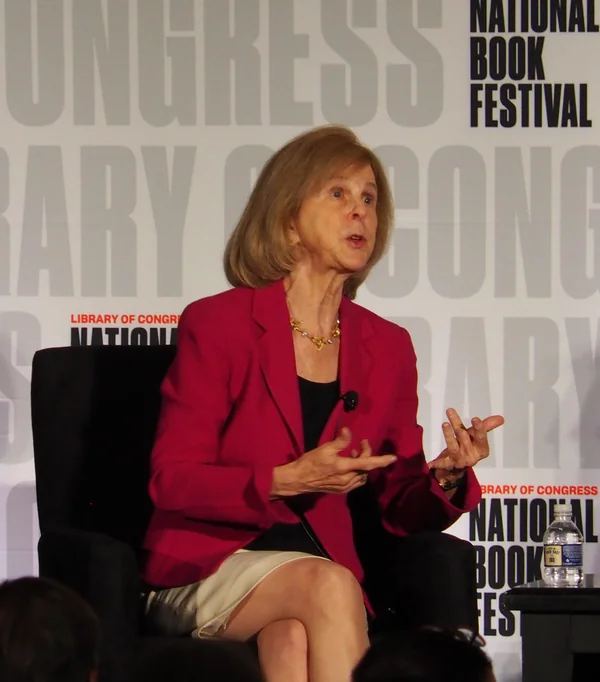
Elaine Pagels (born 1943) is an American historian of religion at Princeton University. Her 1979 book The Gnostic Gospels — drawn from the Nag Hammadi manuscripts — became a bestseller, won the National Book Award, and changed how both scholars and general readers understand early Christianity.
Elaine Pagels is the scholar who made the Gnostic texts legible to the world. Before her, the 52 texts discovered at Nag Hammadi in 1945 were largely confined to academic specialists. After The Gnostic Gospels, they entered mainstream culture.
Her argument — that early Christianity was not one unified tradition but a contest among many, with orthodoxy emerging from politics rather than divine decree — has shaped an entire generation of religious historians. Modern Library placed The Gnostic Gospels at #72 on its list of the 100 best nonfiction books of the 20th century.
From Evangelical Teenager to Harvard Scholar
Pagels’s path to Gnosticism began with a rupture: at 13, she left her evangelical church after it told her that a Jewish friend killed in a car accident would go to hell for not being “born again.” That break from institutional authority — and the questions it left behind — never left her.
She studied classics at Stanford University, earning a BA in 1964 and an MA in 1965, before enrolling at Harvard University for her PhD in religion. At Harvard she studied under Helmut Koester, one of the leading New Testament scholars of the 20th century, and joined a team working directly on the Nag Hammadi manuscripts. She completed her doctorate in 1970.
After her doctorate, Pagels joined Barnard College and headed its Department of Religion from 1974. In 1982, aided by a MacArthur Fellowship grant, she moved to Princeton University, where she holds the Harrington Spear Paine Chair in Religion. She is now Professor Emeritus.
The Gnostic Gospels — The Book That Changed Everything
The Gnostic Gospels (1979) draws on the Nag Hammadi texts to argue that the early Christian church was not theologically unified from the beginning. Pagels follows the historiographical framework first outlined by Walter Bauer in 1934: that diversity preceded orthodoxy, not the other way around.
Her specific claim is that church authorities suppressed the Gnostic texts not because they were self-evidently false, but because they were threatening — to clerical hierarchy, to the male monopoly on authority, and to the growing institutional power of the bishop’s office. Gnostic Christians gave women equal roles in worship and leadership. Orthodox Christianity did not.
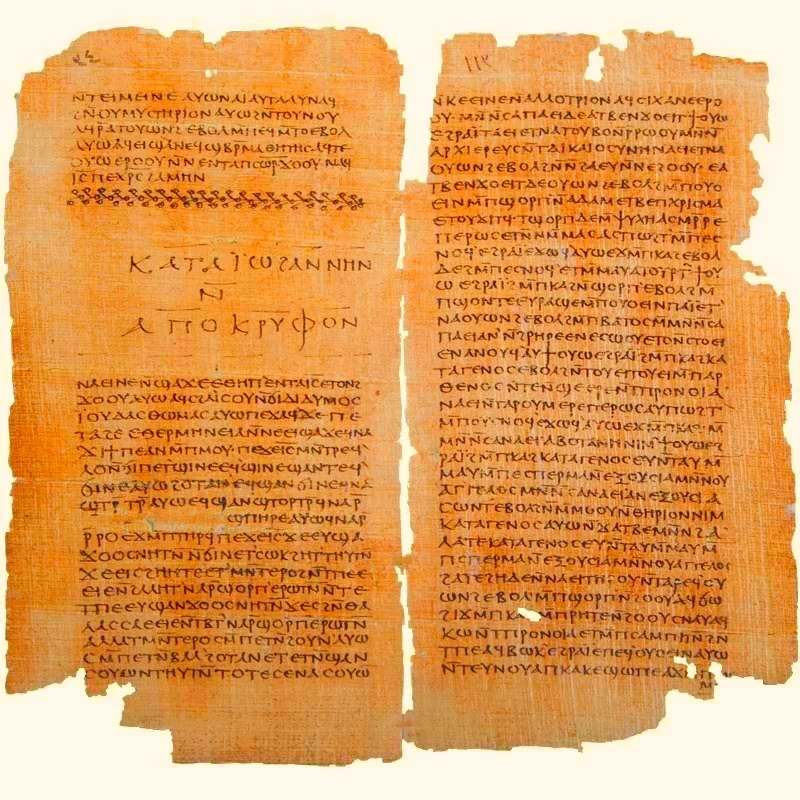
The book won both the National Book Award and the National Book Critics Circle Award in 1979–1980. A review in The Sunday Times prompted Channel 4 to commission a three-part television documentary, “Jesus: The Evidence,” which triggered a national debate about religion in broadcasting. The book has never gone out of print.
Her Core Argument — Early Christianity Was Never One Thing
Pagels’s central claim — simple to state, radical in implication — is that “orthodox” Christianity was not handed down intact from Jesus, but was one tradition among many that won a 2nd-century power struggle.
This reading extends Walter Bauer’s 1934 argument in Orthodoxy and Heresy in Earliest Christianity. Bauer showed that what the 2nd-century church called “heresy” was often the older tradition in a given region. Pagels sharpens this with specific textual evidence from the Nag Hammadi library.
Her later work applies the same framework to different targets. The Origin of Satan (1995) argues the figure of Satan was developed by early Christian writers to demonize religious opponents — Jews, pagans, and rival Christian sects. Beyond Belief (2003) argues the Gospel of Thomas was suppressed because it emphasized the divine light within every person, undermining the authority of institutional mediators.
Other Major Works
Pagels has published ten books over fifty years, each testing a variation on her central question: how does religious authority get built, and at whose expense? For a broader reading list on Gnosticism, see our guide to the best books on Gnosticism.
| Book | Year | Core Argument |
|---|---|---|
| The Gnostic Paul | 1975 | Paul’s letters were read by Gnostics as supporting their theology, not opposing it |
| The Gnostic Gospels | 1979 | Orthodoxy emerged from politics; early Christianity was theologically diverse |
| Adam, Eve, and the Serpent | 1988 | The Genesis story shaped Christian attitudes toward sexuality and political power |
| The Origin of Satan | 1995 | Satan was constructed as a tool to demonize religious and political opponents |
| Beyond Belief | 2003 | The Gospel of John was written to suppress the Thomas tradition of inner divine light |
| Reading Judas | 2007 | The Gospel of Judas reframes Judas as Jesus’s most trusted disciple (co-authored with Karen King) |
| Why Religion? | 2018 | Personal memoir on how religion functions in the face of grief and catastrophic loss |
| Miracles and Wonder | 2025 | The historical mystery of Jesus and what the miracle accounts reveal about his early followers |
Legacy & Influence
Pagels’s legacy operates on two levels that rarely overlap: she changed both the academy and the bookshelf. In academic terms, her work helped establish the Nag Hammadi texts as central — not marginal — to any serious history of early Christianity. The diversity thesis she popularized is now the default starting assumption for most mainstream historians of early Christian origins.
In popular terms, her books sold millions of copies across decades, influenced the feminist theology movement’s arguments about women in church history, and contributed to the cultural moment that produced The Da Vinci Code — which drew (however loosely) on Gnostic-Gospels-era scholarship for its central premise about hidden Christian history.
In 2012 Princeton awarded her the Howard T. Behrman Award for Distinguished Achievement in the Humanities. In 2015 President Obama awarded her the National Humanities Medal. Her most recent book, Miracles and Wonder, appeared in 2025 — fifty years after her first.
Scholarly Criticism — Where Her Work Has Been Challenged
Not all scholars read the Nag Hammadi texts the way Pagels does, and the disagreements are worth knowing.
Michael Williams, in Rethinking “Gnosticism” (1996), challenges the premise underlying her entire body of work: the category “Gnosticism” may not be coherent enough to support the generalizations she builds on it. The texts labeled Gnostic are too diverse, he argues, to be treated as a single movement with shared goals.
Larry Hurtado, in Lord Jesus Christ (2005), disputes her reading of the Gospel of John as an anti-Thomas polemic. He argues that John portrays the apostle Thomas no worse than Peter, and that Pagels overstates the rivalry between the two traditions.
Luke Timothy Johnson has argued more broadly that Pagels’s popular success has come partly at the expense of nuance — that she presents minority scholarly positions as mainstream ones. These are legitimate criticisms. They narrow but do not eliminate the significance of her contribution to understanding early Christian diversity and the Gnostic Gospels.
Frequently Asked Questions
Is Elaine Pagels still alive?
Yes. Elaine Pagels was born on February 13, 1943, making her 83 years old as of 2026. Her most recent book, Miracles and Wonder, was published by Doubleday in 2025.
What is Elaine Pagels best known for?
The Gnostic Gospels (1979). The book drew on the Nag Hammadi manuscripts to argue that early Christianity was radically diverse — and that orthodoxy won through a political struggle, not divine decree. It won the National Book Award and the National Book Critics Circle Award, and was named one of Modern Library’s 100 best nonfiction books of the 20th century (#72).
Is Elaine Pagels a Christian?
She has described herself as an Episcopalian and has written openly about her personal relationship to religious practice — especially in Why Religion? (2018). Her academic work is analytical rather than devotional: she approaches Christianity as a historian studying power, authority, and the construction of belief.
What is the main argument of The Gnostic Gospels?
That the early church was not theologically unified from the start. Drawing on the 52 Nag Hammadi texts, Pagels argues that Gnostic Christianity was a genuine and widespread alternative — not a fringe deviation from an original orthodoxy. The church suppressed these texts because they threatened clerical hierarchy and the authority of bishops, not because they were obviously false.
What is Elaine Pagels’s most recent book?
Miracles and Wonder: The Historical Mystery of Jesus, published by Doubleday in 2025. It examines the miracle accounts in the Gospels and what they reveal about how the earliest followers of Jesus understood him.