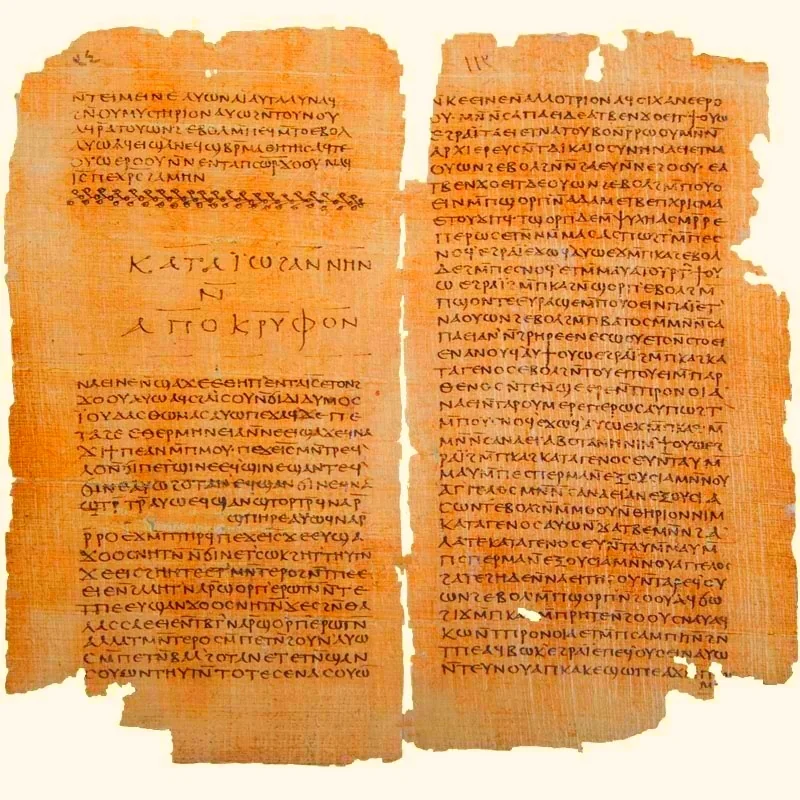
In the early Christian world (1st–4th centuries CE), Gnosticism was not a fringe movement but a major theological current competing on equal terms with what became orthodox Christianity. Multiple forms of Gnostic Christianity coexisted with proto-orthodox communities, often reading the same scriptures, using the same rituals, and worshipping in the same cities. The Nag Hammadi discovery (1945) transformed scholarly understanding: early Christianity was far more diverse than the orthodox narrative admitted, and Gnosticism was one of the major forms that Christianity took before the councils of the 4th century fixed doctrine and canon.
Before "Orthodoxy" Was Fixed
The idea that there was always a single, consistent "Christianity" that Gnostics deviated from is a retrospective construction. In the 1st and 2nd centuries CE, Christianity did not yet have a fixed canon, an established creed, a clear episcopal hierarchy, or an agreed theology. Dozens of communities across the eastern Mediterranean claimed to follow Jesus and disagreed substantially about who he was, what he taught, and how salvation worked.
Elaine Pagels argued in The Gnostic Gospels (1979) that the Nag Hammadi texts show us one set of those communities — sophisticated, theologically developed, reading the same scriptures as orthodox Christians and reaching entirely different conclusions. Karen L. King extended this argument in What Is Gnosticism? (2003), questioning whether "Gnosticism" is a useful category at all, given the diversity of the texts grouped under that label.
Gnostic and Proto-Orthodox Christians — The Same Communities?
Recent scholarship has increasingly argued that Gnostic and proto-orthodox Christians were not always separate communities — they may have coexisted within the same congregations, debating theology and reading each other's texts. Valentinus, the most sophisticated Gnostic theologian, taught in Rome for decades without formal condemnation; he may have come close to being elected bishop. The Gospel of Thomas circulated alongside canonical gospels in Egypt. The Nag Hammadi codices were buried at a Pachomian Christian monastery.
Linjamaa (2024) has argued that the Nag Hammadi Library was used by "a small intellectual monastic elite" within a Pachomian monastery — ordinary monks who read both canonical scripture and Gnostic texts as part of a larger library. This suggests the sharp line between "Gnostic" and "orthodox" Christianity may be partly a later invention.
The Heresiologists — Defining the Enemy
The primary sources for Gnosticism in the early Christian period are the heresiologists — Church writers whose explicit purpose was to identify and refute heresy. The most important are:
- Irenaeus of Lyon — Against Heresies (c. 180 CE), five books. The most comprehensive early anti-Gnostic work; describes Valentinianism, Sethianism, Marcionism, and many other groups in detail.
- Tertullian (c. 155–220 CE) — wrote against Marcion in five books (Adversus Marcionem), plus works against Valentinus and other Gnostics. Main source for Marcionism.
- Hippolytus of Rome — Refutation of All Heresies (c. 225 CE). Broad survey; describes Naassenes, Peratae, and other groups not well known elsewhere.
- Epiphanius of Salamis — Panarion (c. 375 CE). Encyclopedic; 80 heresies described. Contains unique information about obscure groups.
The problem with these sources is obvious: they were written by opponents whose purpose was polemical. They preserved Gnostic theology in order to demolish it, and their descriptions are not neutral. The Nag Hammadi discovery allowed scholars to check the heresiologists' accounts against primary Gnostic texts — and found that while the broad outlines were often accurate, the tone and emphasis were systematically distorted.
Timeline of Gnosticism in Early Christianity
What Gnosticism Contributed to Early Christianity
The historical influence of Gnostic Christianity on the development of orthodox theology is greater than is usually acknowledged. Several doctrinal disputes that shaped Christian theology — the nature of Christ, the relationship between the Old and New Testaments, the question of the resurrection body — were partly defined in opposition to Gnostic positions. Augustine's theology of grace and original sin bears the marks of his nine years as a Manichaean Hearer. The emphasis on the physical resurrection in the Nicene Creed is partly a counter to Gnostic Docetism.
Were Gnostics considered Christians in the early Church?
Many Gnostic teachers considered themselves Christians, read Christian scriptures, and operated within Christian communities. The line between "Gnostic Christian" and "orthodox Christian" was not clearly drawn until the late 2nd century CE, when heresiologists like Irenaeus began systematic efforts to define and exclude Gnostic Christianity. Before that, both Valentinus and Marcion taught openly in Rome without formal condemnation for significant periods.
How did the Church defeat Gnosticism?
Through a combination of theological argument (the heresiological literature), institutional organisation (developing bishop-centred church governance that Gnostic esotericism undermined), and eventually political power after Constantine. The fixation of the biblical canon in the late 4th century and the destruction of non-canonical texts completed the process. The Nag Hammadi library survived only because someone buried it rather than burned it.