
Gnosticism and Christianity emerged from the same 1st–2nd century milieu but developed in fundamentally different directions. The key differences: God (one good creator vs a lesser creator and a true hidden God), the material world (good creation vs a prison), Jesus (incarnate saviour vs illusory spiritual teacher), salvation (faith/grace vs direct experiential knowledge), and scripture (public revelation vs esoteric inner knowledge). The two traditions read many of the same texts — Paul, John, Genesis — and reached opposite conclusions.
Same Roots, Different Directions
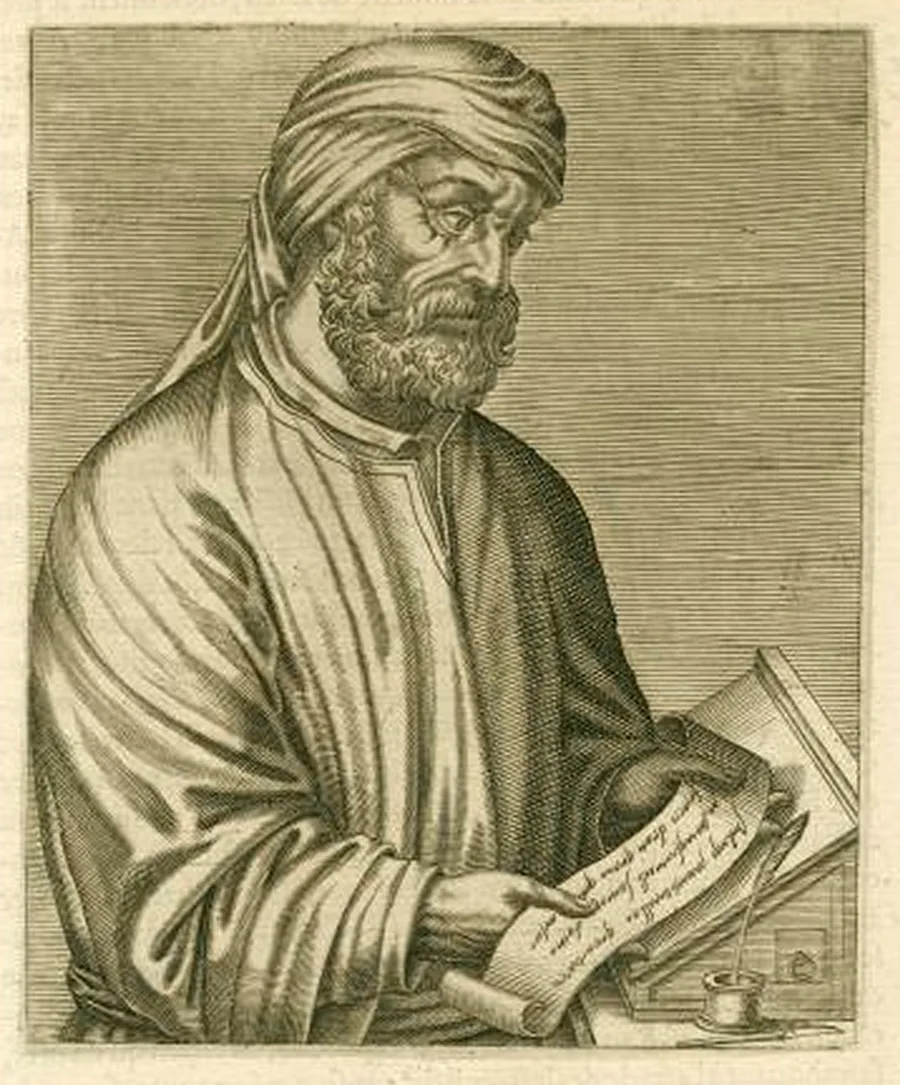
Gnosticism and Christianity are not opposites — they are siblings. Both emerged in the same time and place: the eastern Mediterranean world of the 1st–2nd centuries CE, drawing on Jewish scripture, Greek philosophy, and the figure of Jesus. Many Gnostic texts use the same canonical or near-canonical sources as orthodox Christianity — Paul's letters, the Gospel of John, Genesis — and reach entirely different conclusions. Understanding the differences requires understanding how two communities read the same material and arrived at opposite theologies.
The Nature of God
The most fundamental difference is the understanding of God. Orthodox Christianity, inheriting from Judaism, affirms one God who is simultaneously the supreme being and the creator of the material world. Creation is good. The problem in the world is human sin — moral failure in a fundamentally good creation.
Most Gnostic systems posit two divine principles: a supreme, unknowable God who is entirely spiritual and had nothing to do with creating matter; and a lower deity — the Demiurge — who actually made the material world. The Demiurge is not evil in all traditions (Valentinus saw him as ignorant rather than malicious) but he is definitely inferior, limited, and not the true God. In Sethian Gnosticism, the Demiurge is explicitly identified with the God of the Old Testament, who declares "I am a jealous God" — because he thinks he is the only God, unaware of the true divine realm above him.
| Question | Orthodox Christianity | Gnosticism |
|---|---|---|
| Who is God? | One God, creator of all | True hidden God + inferior Demiurge |
| Is matter good? | Yes — God's good creation | No — a prison, product of Demiurge |
| Was Jesus human? | Fully human and divine | Spiritual teacher; body was illusion (Docetism) |
| How is salvation achieved? | Faith, grace, Christ's sacrifice | Gnosis — direct inner knowledge |
| Who can be saved? | All who believe | Those with divine spark (pneumatics) |
| Is the Old Testament authoritative? | Yes — God's revealed word | Largely the Demiurge's distorted record |
| What is the resurrection? | Bodily resurrection | Spiritual ascent; body irrelevant |
Jesus — Incarnate or Illusory?
Orthodox Christianity insists on the full humanity and full divinity of Jesus. His bodily incarnation, suffering, death, and bodily resurrection are not incidental — they are the mechanism of salvation. God entered matter, redeemed it, and rose from it. The Nicene Creed's specificity about "born of the Virgin Mary, suffered under Pontius Pilate, was crucified, died and was buried" is a deliberate counter to Gnostic Docetism.
Most Gnostic traditions held a Docetic view: Jesus was a spiritual being whose physical body was an appearance, not a reality. A truly divine being cannot be contaminated by matter — cannot suffer, cannot die physically. The crucifixion was either an illusion, a temporary appearance, or happened to the "human Jesus" while the divine Christ-spirit had already departed. The Acts of John has Jesus appear simultaneously to two disciples in different forms — one old, one young — precisely to demonstrate that his appearance in matter was not his true nature.
Salvation — Grace vs Gnosis
For orthodox Christianity (at least in the Pauline tradition), salvation is a gift — given by God to those who have faith, not earned by knowledge or spiritual achievement. It is offered to all: "whosoever believes" (John 3:16). The universality of the offer is essential.
For Gnostics, salvation is through gnosis — the direct, experiential recognition of one's divine origin. This knowledge is not available to everyone equally: in Valentinian Gnosticism, only the pneumatics (those with a divine spark) are capable of gnosis. The psychics (ordinary Christians) achieve a lesser salvation; the hylics (material people) are simply beyond redemption. This is not arbitrary cruelty — it is a statement about ontology: some people, in the Gnostic view, simply do not have the divine spark that makes gnosis possible.
Scripture — Public vs Esoteric
Christianity holds that scripture is public revelation — available to all, interpreted through the community and tradition of the Church. The Gospel is preached openly. Gnosticism typically presented its knowledge as esoteric — transmitted through initiation, accessible to those with the spiritual capacity to receive it. The Gospel of Thomas opens: "These are the secret sayings which the living Jesus spoke." The Secret Book of John presents itself as knowledge revealed privately to John after the resurrection, not publicly taught.
Elaine Pagels argues in The Gnostic Gospels (1979) that this distinction — public vs esoteric — was one of the central reasons the Church rejected Gnostic Christianity: an esoteric religion with different knowledge for different levels of initiate is incompatible with a universal church structure that needs consistent doctrine across communities.
Were They Really Different Religions?
This question is harder than it looks. In the 2nd century, before the councils that fixed orthodox Christian doctrine, the boundaries were much less clear. Many Gnostic teachers considered themselves Christians — reading the same scriptures, honoring Jesus, building communities. It was the heresiologists — Irenaeus, Tertullian, Hippolytus — who drew the lines and declared Gnostics outside the church.
Karen L. King's What Is Gnosticism? (2003) argues that "Gnosticism" as a category is partly a modern scholarly construction — that the ancient texts we group together as "Gnostic" were far more diverse than any single label suggests. The comparison "Gnosticism vs Christianity" is therefore already a simplification: in the 2nd century, multiple Christianities competed, several of which used Gnostic cosmological ideas.
Frequently Asked Questions
Is Gnosticism older than Christianity?
The question is complicated. Some Gnostic ideas — dualism, the divine spark, the Demiurge — appear in Jewish and Platonic thought that predates Christianity. But "Gnosticism" as a distinct religious movement emerged in the 1st–2nd centuries CE, roughly contemporaneously with orthodox Christianity. The two traditions developed together and in reaction to each other, making "older than" a misleading framing.
Did Gnostics believe in Jesus?
Most Gnostic traditions did center on Jesus — but a very different Jesus from the orthodox version. Gnostic Jesus was a spiritual revealer who brought secret knowledge, not a sacrificial saviour who atoned for sin through physical death. His humanity was typically treated as illusory. The Gnostic Jesus is closer to a spiritual guide than a sacrificial lamb.
Why did the Church suppress Gnosticism?
Multiple reasons. Theologically, Gnostic dualism (two gods, evil matter) was incompatible with the doctrine of creation as fundamentally good. Practically, Gnostic esotericism (different knowledge for different initiates) was incompatible with a universal church structure. Ecclesially, Gnostic communities challenged the authority of the bishop by claiming direct spiritual access to truth that bypassed institutional hierarchy. The suppression was both theological and structural.