
The Gnostic Gospels (1979) by Elaine Pagels is the book that introduced the Nag Hammadi manuscripts to a general audience. Its central argument: early Christianity was not a unified tradition — orthodoxy won not because it was truer, but because it built better institutions. The book won the National Book Award and the National Book Critics Circle Award, and remains the standard entry point for readers coming to Gnosticism for the first time.
What Is The Gnostic Gospels?
The Gnostic Gospels (1979) is the book that brought the Nag Hammadi manuscripts out of specialist journals and into public conversation. Before Pagels, the 52 texts found at Nag Hammadi in 1945 were known mainly to scholars of early Christianity. Pagels — then a professor at Barnard College and later at Princeton — took a decade of academic research and turned it into a book a general reader could actually finish.
The book is not a translation or a summary of the Gnostic texts. It is an argument: that early Christianity contained far more diversity than the New Testament suggests, and that the suppression of Gnostic ideas was less about truth than about power. Six chapters, each built around a specific theological dispute, make that case with evidence drawn directly from the Nag Hammadi codices.
The Nag Hammadi Discovery: What Pagels Was Working From
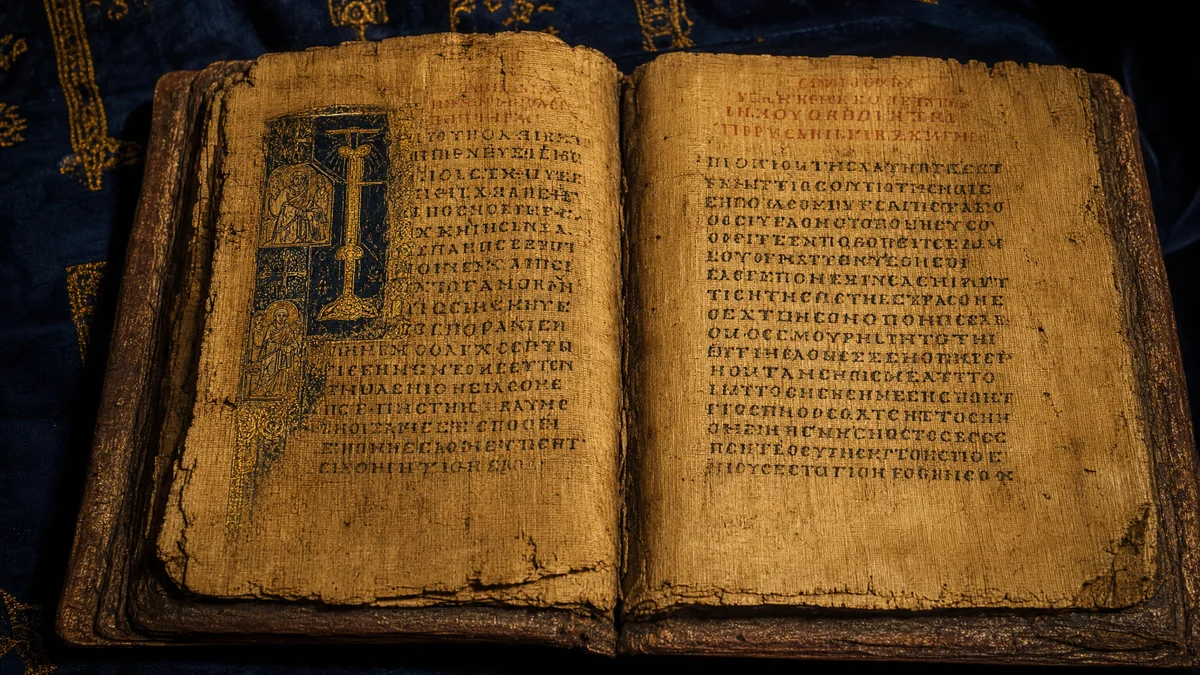
Pagels did not discover these texts — she was part of the Harvard team that studied them after their 1945 discovery near the Egyptian town of Nag Hammadi. A farmer named Muhammad Ali al-Samman found 13 leather-bound papyrus books while digging near a cliff face. The books contained 52 texts in Coptic, most of them previously unknown, now held at the Coptic Museum in Cairo.
Pagels began studying the manuscripts as a doctoral student under Helmut Koester at Harvard, completing her PhD in 1970. By the time the full library was published in English translation in 1977 — just two years before her book appeared — she had spent nearly a decade with these documents.
The book does not attempt to cover all 52 texts. Pagels selects specific documents as evidence for specific arguments — using them the way a lawyer uses case files, not the way an archaeologist catalogues a dig. This focus is the book's strength and also, as later critics noted, one of its weaknesses.
Chapter by Chapter: The Six Arguments
The book is structured as six paired arguments — each chapter takes a theological question and shows how Gnostic texts answered it differently from what became orthodox Christianity. The structure is elegant: Pagels never argues that Gnostics were right. She argues that the choice between them was not purely theological.
Chapter 1 — The Resurrection: Bodily Fact or Spiritual Experience?
The first chapter opens with what Pagels calls the most politically consequential theological argument in early Christianity: whether Jesus rose in the body or in the spirit. Orthodox Christianity insisted on a physical, bodily resurrection — and this insistence, Pagels shows, was not incidental. If Christ rose bodily, then only those who witnessed the risen body could serve as legitimate authorities. Apostolic succession — the chain of authority running from the original disciples to the bishops — depends on this claim.
Gnostic texts read the resurrection differently. The Gospel of Mary presents Mary Magdalene receiving visions of the risen Christ — not a body, but a spiritual presence. The Gospel of Thomas shows no resurrection narrative at all; the living Jesus simply speaks. For Gnostics, resurrection was a metaphor for inner transformation — and if anyone who achieved gnosis had access to the risen Christ, then anyone could be a spiritual authority. No bishops required.
Chapter 2 — God the Father — or Mother?
Several Nag Hammadi texts describe the divine not as Father alone but as a dyad — masculine and feminine — or invoke a divine Mother alongside God the Father. The text known as Thunder, Perfect Mind speaks in the voice of a divine feminine power: "I am the first and the last. I am the honored one and the scorned one." The figure of Barbelo, the divine Mother-Father, appears across multiple Sethian texts.
Pagels connects this directly to practice: in some Gnostic communities, women served as priests, prophets, and teachers — roles unavailable in orthodox congregations. A divine feminine principle, she argues, authorised female spiritual leadership. Fixing God as exclusively male made an all-male clergy theologically self-evident.
Chapter 3 — Christ: Human or Cosmic Stranger?
Whether Christ truly suffered matters less as theology than as politics — that is Pagels's argument in Chapter 3. Orthodox Christianity required a fully human Jesus who really died on the cross, because real historical suffering validated the apostles as real witnesses. Those who saw Christ suffer had authority that later believers could only inherit through them.
Gnostic texts tended toward what scholars call Docetism — the idea that Christ only appeared to be human. The Revelation of Peter describes Christ laughing from the cross while his physical body suffers below him: the spiritual Christ is untouched. This was not merely abstract theology. If Christ did not really suffer, then martyrdom — dying for Christ — lost its defining significance, and the moral authority martyrs held in orthodox communities evaporated.
"He whom you saw on the tree, glad and laughing, this is the living Jesus. But this one into whose hands and feet they drive the nails is his fleshly part, which is the substitute being put to shame."
Chapter 4 — Persecution, Martyrdom, and the Politics of Suffering
When Roman authorities arrested Christians in the 2nd century, Gnostic and orthodox communities responded differently — and Pagels shows the response was shaped by theology, not just courage. Orthodox leaders like Ignatius of Antioch and Tertullian celebrated martyrdom as the supreme act of faith. Those who died proved their commitment; those who survived persecution accumulated moral authority.
Some Gnostic texts took a sharply different view. If the material body is a prison and physical death a liberation, dying for a physical resurrection you don't believe in looks less like heroism and more like a misunderstanding. Several texts encouraged flight or concealment rather than martyrdom. This created a practical split: the orthodox built communities around shared suffering; Gnostics built them around shared knowledge.
Chapter 5 — Women in Gnostic Christianity
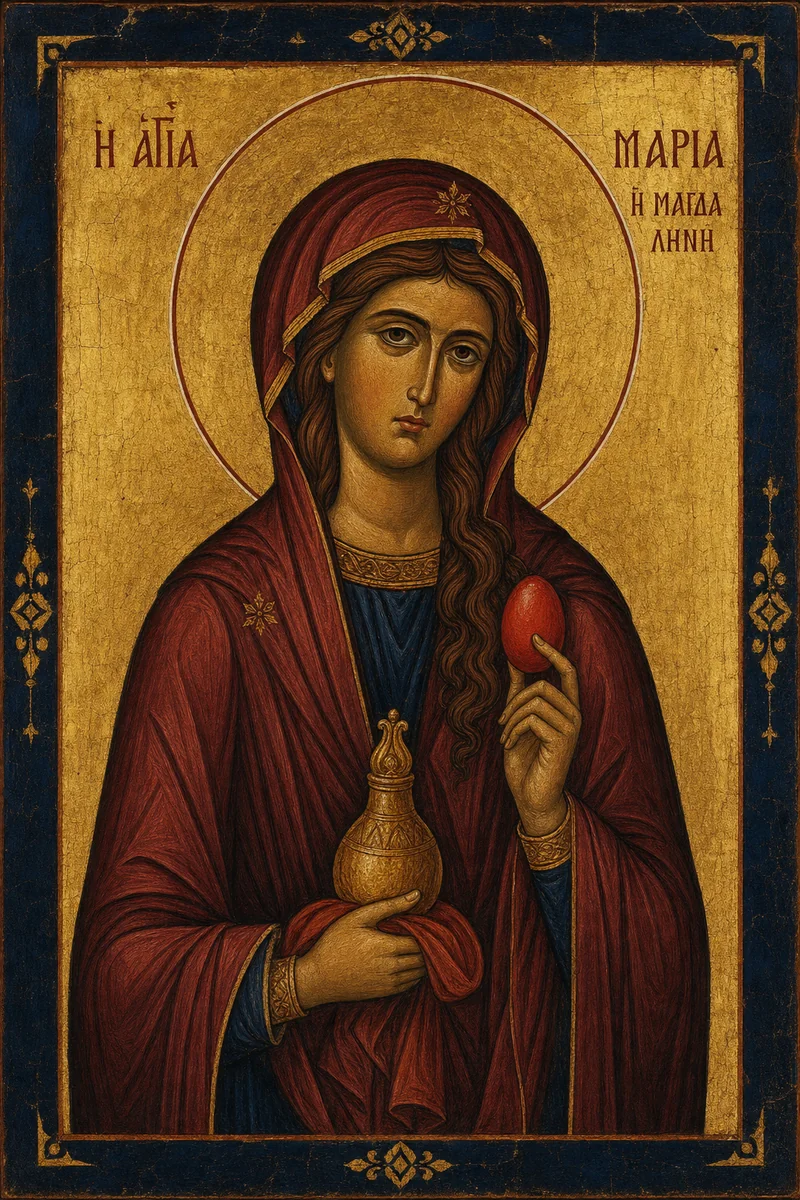
Mary Magdalene appears in the Gospel of Mary as the disciple Jesus loved most and trusted with teachings he did not share with the others — a direct challenge to Peter's primacy. In this text, Peter asks Mary to share what the risen Christ told her privately. She does. Andrew and Peter then reject her account, not because it is incoherent, but because they cannot accept that a woman received teaching they did not.
Pagels argues this reflects actual practice in some Gnostic communities, where women served as teachers, prophets, and ritual leaders. The church father Tertullian complained bitterly about Gnostic women who "dare to teach, to dispute, to exorcise, to undertake cures." His complaint is evidence. Orthodox Christianity progressively restricted women to subordinate roles — grounded in texts like 1 Timothy 2:12 ("I permit no woman to teach or to have authority over a man") — while Gnostic groups, authorised by a feminine divine principle, made space for female leadership.
Chapter 6 — One God, One Bishop: The Politics of Monotheism
Pagels's closing argument is her boldest: the insistence on a single God was inseparable from the insistence on a single church governed by a single hierarchy. She follows the thesis Walter Bauer put forward in 1934 in Orthodoxy and Heresy in Earliest Christianity — that the Roman church extended its authority by declaring competitors heretical, not by demonstrating theological superiority.
The logic Pagels traces runs: one God → one emperor → one bishop per city → one universal church. Irenaeus of Lyon, writing around 180 AD, made this architecture explicit. Gnostic pluralism — multiple divine beings, multiple valid spiritual paths, no fixed creed — was structurally incompatible with an institution that needed to unify scattered communities across the Roman Empire. Monotheism was not just theology. It was organisational policy.
| Question | Orthodox answer | Gnostic answer |
|---|---|---|
| What is God? | Single male Father, creator of all | Transcendent Father + divine Mother; Demiurge ≠ true God |
| Who is Christ? | Fully human, truly suffered, bodily risen | Cosmic being; body an appearance; resurrection spiritual |
| How is one saved? | Faith, sacraments, apostolic church | Direct gnosis — personal knowledge of divine origin |
| Who has authority? | Bishops in apostolic succession | Anyone who achieves gnosis |
| What about women? | Subordinate; no teaching or priestly role | Equal spiritual access; female leadership documented |
The Core Thesis: Why Orthodoxy Won
The book's unifying claim is institutional, not theological. Pagels follows Walter Bauer's 1934 thesis that the Roman church extended its reach by systematically labelling competitors as heretics — not after winning a fair theological debate, but as a strategy of consolidation. Irenaeus of Lyon's Against Heresies (c. 180 AD) is the key document: a systematic attack on Gnostic diversity in the name of apostolic unity.
Pagels is not arguing that Gnosticism was correct. She is arguing that the theological argument was never the primary driver. The practical argument — which form of Christianity could govern a large, diverse, persecuted community across the Roman Empire — determined the outcome. Gnostic pluralism was a feature in small communities of initiates. It was a fatal flaw for a would-be universal church.
How the Book Was Received — Then and Now
Scholarly Criticism: What Has Been Challenged Since 1979
The Gnostic Gospels was celebrated in 1979 — and has been argued with ever since. Four main lines of criticism have emerged from scholars who broadly share Pagels's respect for the Nag Hammadi material but dispute specific claims or the book's overall framework.
Luke Timothy Johnson (Emory University) argued that Pagels reduces theology to power politics — that she fails to take seriously the genuine theological differences between Gnostics and orthodox Christians, treating doctrinal disputes as mere cover for institutional competition. For Johnson, real people believed the resurrection really happened; explaining that belief purely through the lens of authority-maintenance misses what was actually at stake.
Pheme Perkins (Boston College) noted that Pagels overstates the practical authority women held in Gnostic communities. Gnostic texts feature female divine figures and female disciples — but documentary evidence for women actually leading Gnostic congregations is thin. The mythology is inclusive; the practice may have been considerably less so.
Michael Williams, in Rethinking "Gnosticism" (1996), challenged the premise the book is built on: that "Gnosticism" names a coherent movement at all. Williams argued that the texts grouped under this label are too diverse to constitute a single tradition. If there was no unified Gnosticism, the contrast Pagels draws between "Gnostic" and "orthodox" becomes considerably more complicated.
Bart Ehrman — who agrees with Pagels that early Christianity was far more diverse than the canon suggests — has disputed specific text readings and noted that Pagels's selection of evidence sometimes favours her argument over the full picture the manuscripts present.
Where to Read the Texts Pagels Discusses
Every text Pagels discusses is available to read in full — free — online. The Gnostic Society Library at gnosis.org holds complete translations of all major Nag Hammadi texts. For print editions, Marvin Meyer's The Nag Hammadi Scriptures (2007, HarperOne) is the current standard scholarly translation.
For individual text guides on this site, see: Gospel of Thomas, Gospel of Mary, Gospel of Philip, Secret Book of John, and the full Nag Hammadi Library overview. For the author herself, see the Elaine Pagels profile.
Frequently Asked Questions
Is The Gnostic Gospels accurate?
The book's core historical claims — that early Christianity was diverse, that Gnostic texts existed and were suppressed, that the Nag Hammadi library contains genuine 2nd–4th century documents — are well established and not seriously disputed. Pagels's interpretive framework (that orthodoxy won through institutional power rather than theological superiority) is more contested. Scholars like Luke Timothy Johnson argue she underweights genuine theological conviction; Michael Williams questions whether "Gnosticism" is even a coherent category. The book is accurate as history; its political interpretation is a scholarly position, not a proven fact.
How long is The Gnostic Gospels?
The main text runs approximately 182 pages, followed by substantial notes and bibliography. It is a short book by academic standards — readable in a weekend. Pagels wrote it explicitly for a general audience, and the prose is accessible without being simplified.
Is The Gnostic Gospels the same as the Nag Hammadi Library?
No. The Nag Hammadi Library is the collection of 52 ancient texts discovered in Egypt in 1945. The Gnostic Gospels is Elaine Pagels's 1979 book about some of those texts — an analysis and argument, not a translation. If you want to read the actual ancient documents, the standard edition is Marvin Meyer's The Nag Hammadi Scriptures (2007). Several texts are also available free at gnosis.org.
Did Elaine Pagels write other books about Gnosticism?
Yes. The Gnostic Paul (1975) argues that Paul's letters were read as Gnostic texts by some early Christians. Adam, Eve, and the Serpent (1988) examines how Genesis shaped Christian attitudes to sexuality and power. Beyond Belief: The Secret Gospel of Thomas (2003) returns to the Nag Hammadi texts, focusing on the Gospel of Thomas and its contrast with the Gospel of John. Reading Judas (2007, with Karen King) analyses the Gospel of Judas after its 2006 publication.
Is The Gnostic Gospels suitable for beginners?
Yes — it was written for readers with no prior knowledge of Gnosticism or early Christian history. Pagels assumes intelligence but not specialist knowledge. Readers who want broader context first might start with our overview of the Gnostic Gospels or the Nag Hammadi Library guide before reading the book itself.