The Gnostic Gospels are a collection of ancient texts discovered in 1945 near Nag Hammadi, Egypt, offering an alternative version of early Christian teaching. Written in Coptic between the 2nd and 4th centuries AD, they present a Christianity where salvation comes through direct spiritual knowledge — gnosis — rather than faith or ritual. The term was popularized by scholar Elaine Pagels in her landmark 1979 book of the same name.
A Name That Explains Everything — and Nothing
The term "Gnostic Gospels" comes from Elaine Pagels' 1979 book of the same name — not from any ancient category. Pagels, then a professor at Barnard College, used the phrase to describe the texts found at Nag Hammadi in a way that would make sense to a general audience. The book won the National Book Award in 1980 and introduced millions of readers to texts that had previously been locked inside specialist journals.
Scholars typically prefer "the Nag Hammadi Library" — and with good reason. Of the 52 texts in the collection, only around eight actually carry the word "gospel" in their title. The rest are revelations, philosophical treatises, hymns, letters, and cosmological narratives. Calling them all "gospels" is a simplification, but a useful one: it signals that these texts were doing what the New Testament gospels do — telling people who Jesus was and what he meant.
Elaine Pagels: "The Gnostics did not think of themselves as heretics. Many claimed to offer, on the authority of secret tradition, a higher knowledge of Christ — one available only to the spiritually mature." (The Gnostic Gospels, 1979)
James M. Robinson's translation — The Nag Hammadi Library in English, published by Harper & Row in 1977 — remains the standard scholarly edition. Marvin Meyer's updated The Nag Hammadi Scriptures (HarperOne, 2007) is the most complete modern translation, with introductions and critical notes for each text. Both use the scholarly name, not Pagels'.
Discovered by Accident — Nag Hammadi, 1945
In December 1945, an Egyptian farmer named Muhammad ʿAlī al-Sammān was digging for fertilizer near a cliff face at Nag Hammadi in Upper Egypt when his mattock struck a sealed clay jar. He hesitated to break it — local superstition held that such jars might contain a jinn. The possibility that it contained gold won out. Inside were 13 leather-bound papyrus codices.
The find did not move immediately to scholars. Some pages were burned as oven tinder by al-Sammān's mother. Several codices were sold through antiquities dealers in Cairo. One — later called the Jung Codex, or Codex I — was smuggled out of Egypt and purchased by the Carl Gustav Jung Institute in Zurich in 1951 as a birthday present for the psychologist Carl Jung. Jung died before reading much of it. The pages were not returned to the Coptic Museum in Cairo until 1975.
- Found: December 1945, Nag Hammadi, Upper Egypt
- Contents: 13 leather-bound codices, 52 texts
- Language: Coptic (translated from earlier Greek originals)
- Date of manuscripts: 3rd–4th century AD
- Now housed: Coptic Museum, Cairo
- First English translation: James M. Robinson, 1977
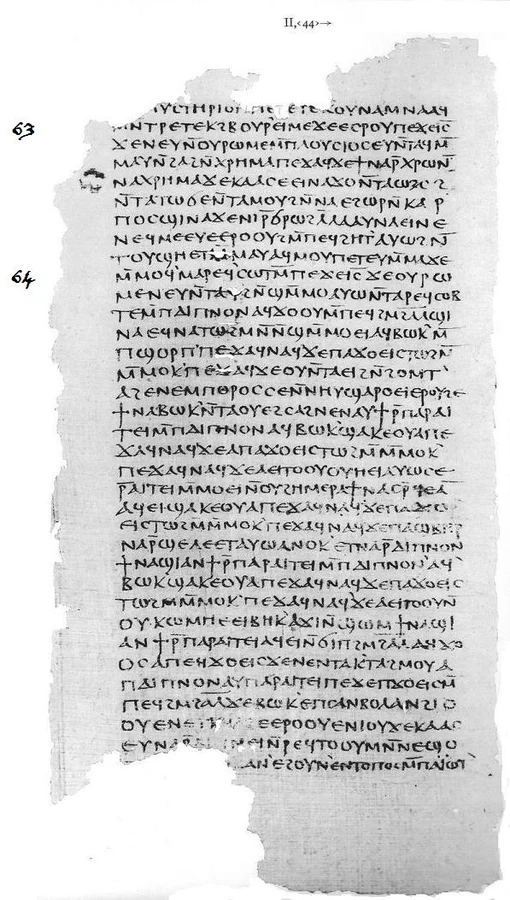
Scholar Gilles Quispel, who first examined the Jung Codex, opened it to find the words: "These are the secret words which the living Jesus spoke, and which the twin, Judas Thomas, wrote down." He was reading the Gospel of Thomas — and recognized immediately that fragments of it had already appeared in Greek papyri found at Oxyrhynchus in 1898. The full text had been waiting in a jar in the desert for sixteen centuries.
The Most Important Gnostic Gospels
Not all 52 Nag Hammadi texts are gospels — but eight carry the name, and each one challenges a different orthodox belief. Several other key texts were found separately, outside the Nag Hammadi cache entirely.
| Text | Found in | Approx. date | What makes it significant |
|---|---|---|---|
| Gospel of Thomas | Nag Hammadi, Codex II | c. 50–150 AD | 114 sayings of Jesus — no narrative, no miracles, no crucifixion story |
| Gospel of Philip | Nag Hammadi, Codex II | c. 180–250 AD | Valentinian sacramental theology; refers to Mary Magdalene as Jesus' companion |
| Gospel of Mary | Berlin Codex (not Nag Hammadi) | c. 150–200 AD | Mary Magdalene as primary revelator, superior to the male disciples |
| Gospel of Judas | Codex Tchacos (2006) | c. 130–170 AD | Judas acts on Jesus' instructions; the betrayal was a liberation, not a crime |
| Gospel of Truth | Nag Hammadi, Codex I | c. 140–180 AD | Possibly written by Valentinus himself; a meditation on the nature of ignorance and salvation |
| Gospel of the Egyptians | Nag Hammadi, Codex III & IV | c. 150–200 AD | Sethian hymn-text on the divine Aeons and Seth as heavenly saviour — also called the Holy Book of the Great Invisible Spirit |
| Gospel of the Savior | Berlin Papyrus 22220 (fragmentary) | c. 100–200 AD | Fragmentary Coptic dialogue between Jesus and his disciples at the crucifixion; only partially preserved |
| Gospel of Basilides | Lost — known from Origen, Jerome & Ambrose | c. 120–140 AD | Written by the Gnostic teacher Basilides; no copy survives — known only from Church Father critiques and quotations |
The Gospel of Mary and the Gospel of Judas are worth separating from the Nag Hammadi cache. The Gospel of Mary survives in the Berlin Codex, discovered in Egypt in the 1890s and not published until 1955. The Gospel of Judas made headlines in 2006 when National Geographic published the first translation from Codex Tchacos — a manuscript that had spent decades on the illegal antiquities market before scholars could study it.
For a full guide to every text in the collection, see The Nag Hammadi Library.
Three Traditions Behind the Texts
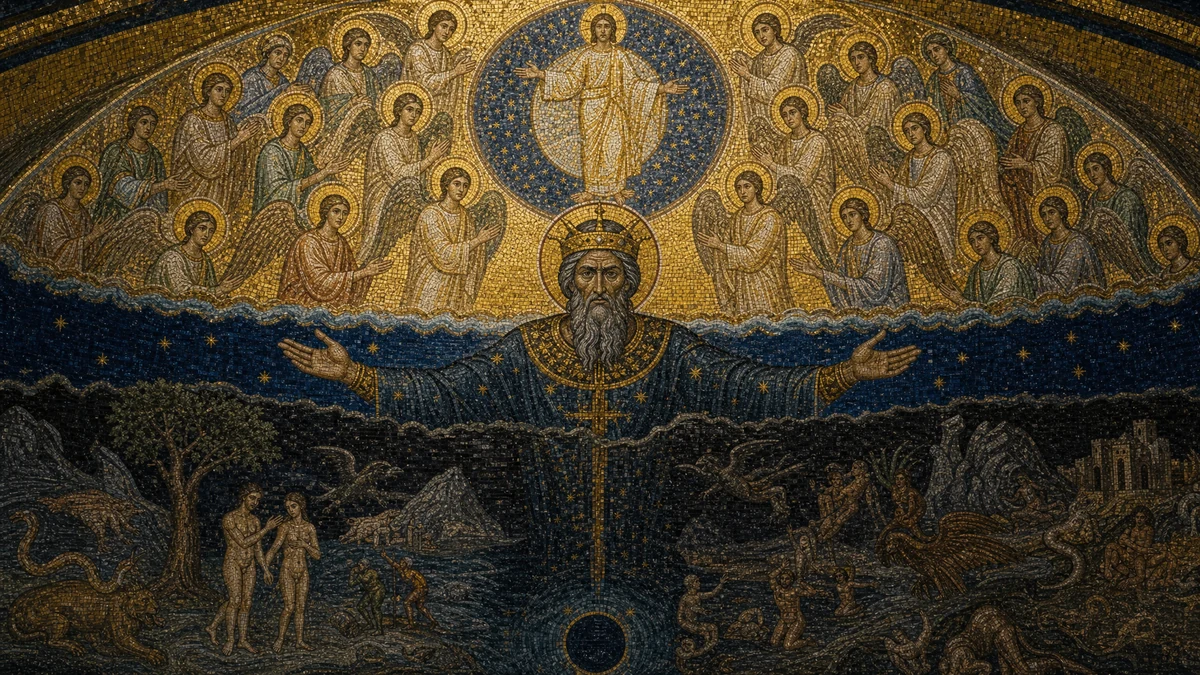
The 52 Nag Hammadi texts are not the product of one unified religion — they come from at least three distinct Gnostic traditions, each with its own cosmology, its own understanding of Jesus, and its own answer to the question of what human beings are doing in a material world.
Sethian Gnosticism is the darkest and most elaborate tradition. Sethian texts describe the material world as a prison constructed by Yaldabaoth — an ignorant, arrogant creator god who declared himself the only god without knowing there was a higher divine realm above him. Seth, the third son of Adam, is the revealer-figure who brings saving knowledge to humanity. Key Sethian texts include the Secret Book of John, the Hypostasis of the Archons, and the Apocalypse of Adam.
Valentinian Gnosticism, named after the teacher Valentinus (active in Rome c. 136–165 AD), is less anti-cosmic and more sophisticated. Valentinians believed the material world was a mistake — not a malicious act — and placed more emphasis on sacramental life and the eventual redemption of matter. Hans Jonas, in The Gnostic Religion (1958), called Valentinianism "the most significant intellectual achievement of the Gnostic movement." Key texts include the Gospel of Truth and the Gospel of Philip.
Thomasine Christianity is the tradition behind the Gospel of Thomas. Rather than elaborate cosmology, Thomasine texts focus on wisdom sayings — the secret words of Jesus that, once understood, dissolve the ignorance keeping humanity trapped. There is no creation myth, no Demiurge, no archons. Salvation is a matter of paying attention to what Jesus actually said.
What the Gnostic Gospels Actually Teach
The Gnostic Gospels teach a fundamentally different Christianity — one where the problem isn't sin, but ignorance. Four ideas run through almost every text in the collection.
First: the material world was not made by the true God. It was created by the Demiurge — a lower, flawed divine being who mistook himself for the highest power. The true God is transcendent, unknowable, and entirely uninvolved in the mess of physical existence.
Second: Jesus was a revealer, not a sacrifice. He came to transmit the hidden knowledge — gnosis — that allows the divine spark within each person to recognize its own origin. Bart Ehrman, in Lost Christianities (2003), describes the Gnostic Jesus as "a teacher of secret wisdom, not a savior who dies for sins."
Third: salvation is a matter of knowledge, not faith. The Pneumatic — the spiritually awakened person — achieves liberation by remembering that they are not, at their core, creatures of matter at all. They carry a divine spark, a fragment of the true God's light, imprisoned in flesh.
Fourth: institutional religion is part of the problem. The church, with its bishops, its rituals, and its doctrines, is — in many Gnostic texts — a structure that keeps people focused on the wrong god. The Demiurge is the god of the Old Testament. Worshipping him, following his law, seeking his forgiveness: all of this misses the point entirely.
If your leaders say to you, "Look, the kingdom is in the sky," then the birds of the sky will precede you. If they say to you, "It is in the sea," then the fish will precede you. Rather, the kingdom is inside of you, and it is outside of you. When you know yourselves, then you will be known, and you will understand that you are children of the living Father.
Why Weren't They Included in the Bible?
A common myth holds that the Council of Nicaea in 325 AD decided which books belonged in the Bible. It didn't. Nicaea fixed the date of Easter and settled a dispute about the nature of Christ. Canon formation was a slower, messier, and far less dramatic process.
The first major systematic attack on Gnostic texts came from Irenaeus of Lyon, whose Against Heresies (c. 180 AD) catalogued and refuted dozens of Gnostic groups. Irenaeus argued that only four gospels were legitimate — Matthew, Mark, Luke, and John — because there are four winds and four corners of the earth. It was not a scholarly argument, but it carried weight.
Gnostic communities used these texts for generations. Some of the Nag Hammadi codices may have been buried by monks at a nearby Pachomian monastery around 367 AD — possibly because Athanasius' letter made possession of unauthorized texts dangerous. The jar in the desert may have been a library saved from destruction, not a cache abandoned by a dying sect.
Ehrman argues in Lost Christianities that the exclusion of these texts was a political outcome, not a theological inevitability: "The 'wrong' versions of Christianity lost. And they lost not because they were obviously wrong, but because the 'right' versions had better social networks, better organization, and more effective leadership."
Elaine Pagels and the Modern Rediscovery
For 30 years after the Nag Hammadi discovery, the texts remained confined to specialist journals and academic conferences. Elaine Pagels changed that in 1979.
Her book The Gnostic Gospels argued something that felt genuinely radical at the time: the Gnostics were not a bizarre fringe movement. They were an early and serious form of Christianity that lost a power struggle — not a theological argument. The "winners" wrote the history, defined the heretics, and buried the losers' books in a jar in the Egyptian desert.
Elaine Pagels: "It is the winners who write history — their way. No wonder, then, that the viewpoint of the successful majority has dominated all traditional accounts of the origin of Christianity." (The Gnostic Gospels, 1979)
Karen L. King at Harvard extended this work, particularly with her scholarship on the Gospel of Mary, arguing that the text shows women held positions of spiritual authority in early Gnostic communities that were later erased from orthodox history. Hans Jonas had laid the philosophical groundwork in The Gnostic Religion (1958), the first serious academic study of Gnosticism as a coherent worldview rather than a collection of heresies. Together, these scholars moved the Gnostic Gospels from obscurity to the center of debates about Christian origins.
Where to Read the Gnostic Gospels Free Online
All major Gnostic Gospels are available free online — three sources cover the full Nag Hammadi Library.
For a print edition, Marvin Meyer's The Nag Hammadi Scriptures (HarperOne, 2007) is the most complete modern translation, with introductions to each text and critical notes. For a complete reading guide — which texts to start with, what order makes sense, and how to approach the more difficult cosmological works — see our complete guide to Gnostic texts.
Frequently Asked Questions
What are the Gnostic Gospels in simple terms?
The Gnostic Gospels are ancient religious texts — mostly found in Egypt in 1945 — that present an early form of Christianity very different from what became orthodox. They teach that the material world was created by a lesser, flawed god, that Jesus came to transmit secret knowledge rather than die for sins, and that salvation means recognizing the divine spark within yourself. The term was popularized by scholar Elaine Pagels in her 1979 book of the same name.
Are the Gnostic Gospels older than the New Testament?
Some may be. The Gospel of Thomas is dated by most scholars to somewhere between 50 and 150 AD — meaning its earliest layers could predate the canonical gospels of Luke and John. The Nag Hammadi manuscripts themselves date from the 3rd–4th centuries AD, but they are copies of texts composed much earlier. The Gospel of Judas, composed around 130–170 AD, is slightly later than the canonical gospels.
Why weren't the Gnostic Gospels included in the Bible?
They were excluded over several centuries, not at a single council meeting. Irenaeus of Lyon attacked Gnostic texts systematically around 180 AD. Athanasius of Alexandria issued the first definitive list of 27 New Testament books in 367 AD — and the Gnostic texts weren't on it. The exclusion was the result of two centuries of theological argument, church politics, and the organizational advantages of the emerging orthodox movement. Bart Ehrman argues that the Gnostics lost because orthodox Christianity had better institutional structure, not because their arguments were weaker.
Does the Gospel of Philip say Jesus was married to Mary Magdalene?
Not exactly. The Gospel of Philip calls Mary Magdalene Jesus' "companion" — the Greek word koinônos, which can mean partner, associate, or consort depending on context. One passage says Jesus used to kiss her often, though the manuscript is damaged and the location of the kiss is not legible. Scholars disagree sharply on what this means. Karen L. King argues it points to Mary's spiritual authority, not a marital relationship. The text never uses the word "wife."
What is the most important Gnostic Gospel?
The Secret Book of John (Apocryphon of John) is the most theologically complete — it contains the full Sethian cosmology, from the true God and the Pleroma down to the creation of matter and the plan for human salvation. Four copies of it were found, which suggests it was widely read. The Gospel of Thomas is the most studied in modern scholarship, because its 114 sayings raise direct questions about what Jesus actually taught. Both are essential.
Is the Gospel of Judas one of the Gnostic Gospels?
Yes — though it was not part of the 1945 Nag Hammadi discovery. The Gospel of Judas was found in the 1970s near El Minya in Egypt, then spent decades on the illegal antiquities market before being acquired and conserved. National Geographic published the first translation in 2006. The text presents Judas as the only disciple who truly understood Jesus — and whose betrayal was carried out on Jesus' own instruction, to free his divine self from its material body.